Students
Arts & Sciences
Students
Fast-Tracking Justice: Katie McPartlin’s Three-Year Pursuit
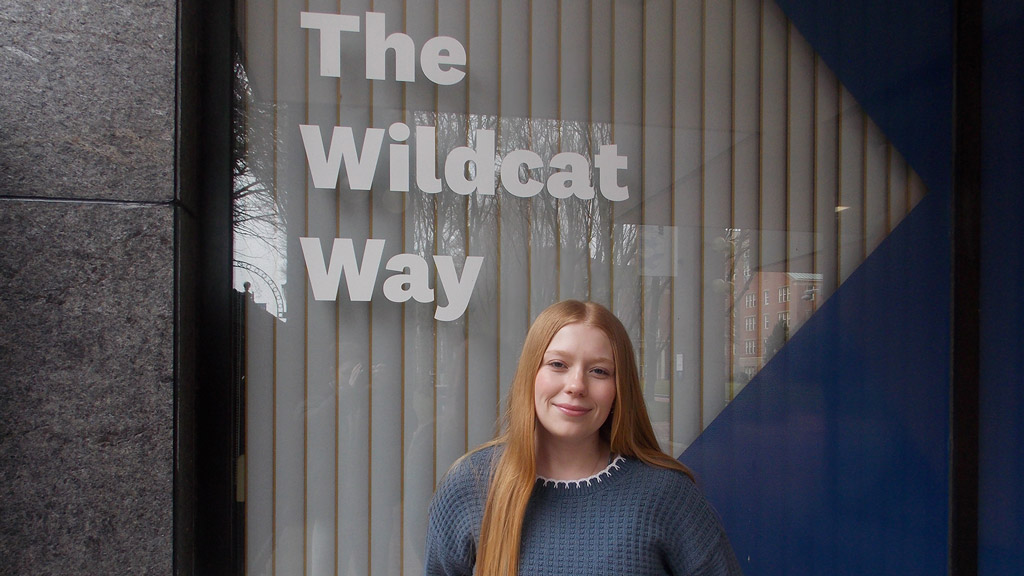
Meet Katie McPartlin ’28, who entered Johnson & Wales University’s three-year Criminal Justice B.S. program in Fall 2025, attracted by the idea of hitting the ground running a year sooner than students at other schools. McPartlin is considering “many options” after she earns her Criminal Justice (CJ) degree — possibly even several at once.
“After JWU I am interested in working for the Department of Corrections as a correctional officer,” she shares. “I am also interested in helping victims, and I could do this by becoming a forensic interviewer, where I would perform interviews with children who are possible victims of abuse. My favorite thing about graduating with a CJ degree is that I likely will be able to pursue both of these careers.”
Why JWU’s Three-Year Degree?
“The main thing that attracted me was how I would be able to take classes that related to my major within my first semester,” shares McPartlin. “During my first year, I have taken four classes that solely focus on my major, whereas I know sophomores at other universities who haven’t been able to take many major-focused classes. My classes in this program have been very interesting and have been helping me explore what I would like to do with my degree.”
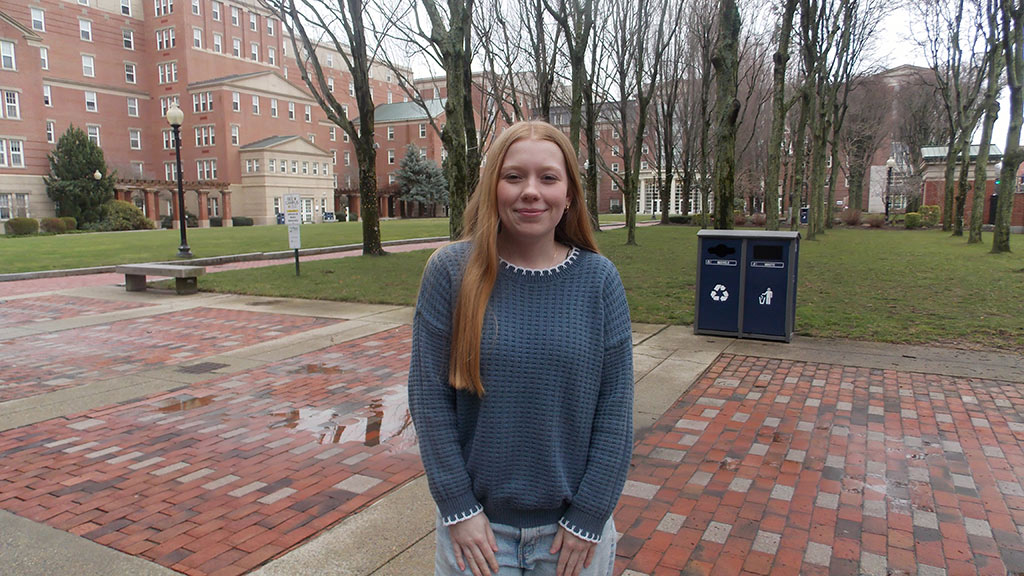
And how has she fared so far?
“So far, the program has been what I imagined it would be when I first applied in the best way possible.”
She has also been eyeing JWU’s student-run clubs and organizations and identified one that fits her perfectly; she plans on joining the Criminal Justice Association next year.
JWU Faculty Who’ve Impacted Her Education
Among her faculty, McPartlin particularly appreciates her Sociology instructor, Ashley Lemons. “She held several positions at the FBI and brings her firsthand experiences into the classroom,” notes McPartlin. “She was able to adapt her curriculum to be crime-enriched since the majority of our class was made up of Criminal Justice majors.”
Another standout: “[Assistant] Professor Frazier has also been able to capture my interest in being hands-on in the CJ program by organizing trips. She is currently planning a trip to tour one of Rhode Island’s prisons. I will definitely be signing up for it since it will give me insight into possible careers for me, like a correctional officer.”
Real-World Experience: Participating in Police Training
In October 2025, McPartlin traveled to Camp Varnum, a National Guard facility in Narragansett, Rhode Island, where she assisted the Providence Police Department as an “actor” for police academy trainees.
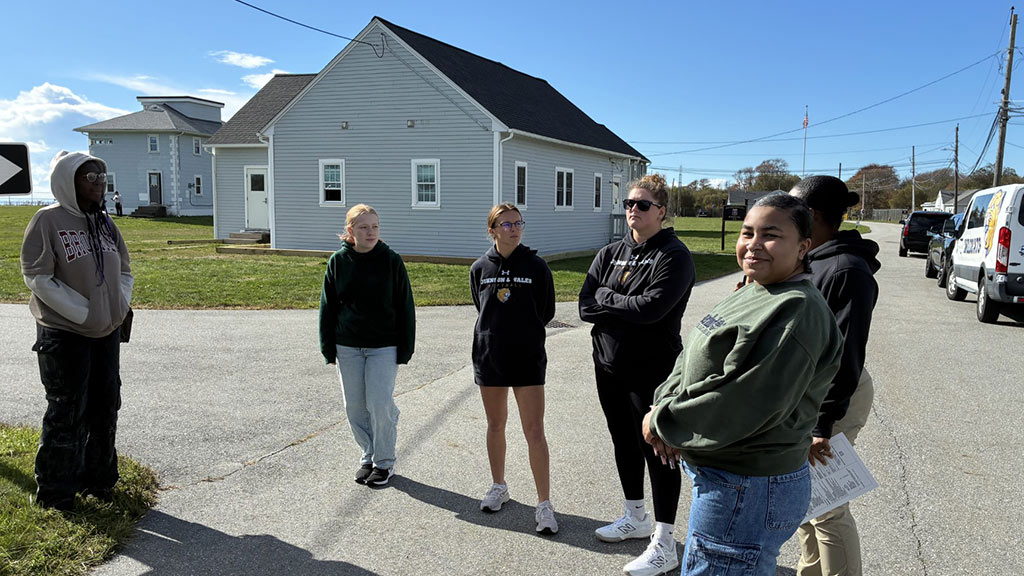
“At the facility there were stations for the trainees to simulate real life situations that they would have to deal with in the policing field,” she explains. “For example, I was placed in a car to play out a car crash for the trainees to learn how to properly take initiative when responding to the scene. As the day went on, the ‘crashes’ would get more elaborate, and they had actors fleeing the scene, resulting in the trainees having to chase the actor.”
She had another role in traffic enforcement: playing, aptly, a student. “The facility had a fake fraternity house where trainees would act as if they had to deal with a noise complaint and disorderly conduct,” she explains. “They had real officers playing scouts for when the trainees needed to use force. Our role was to distract the trainees and challenge them to stay professional when in an agitated environment. I also observed trainees responding to stimulated mental health crises. I learned about the reality of being in a police academy and how there is no ‘right’ way to respond to every situation, as two scenes will never be the same in police work.”
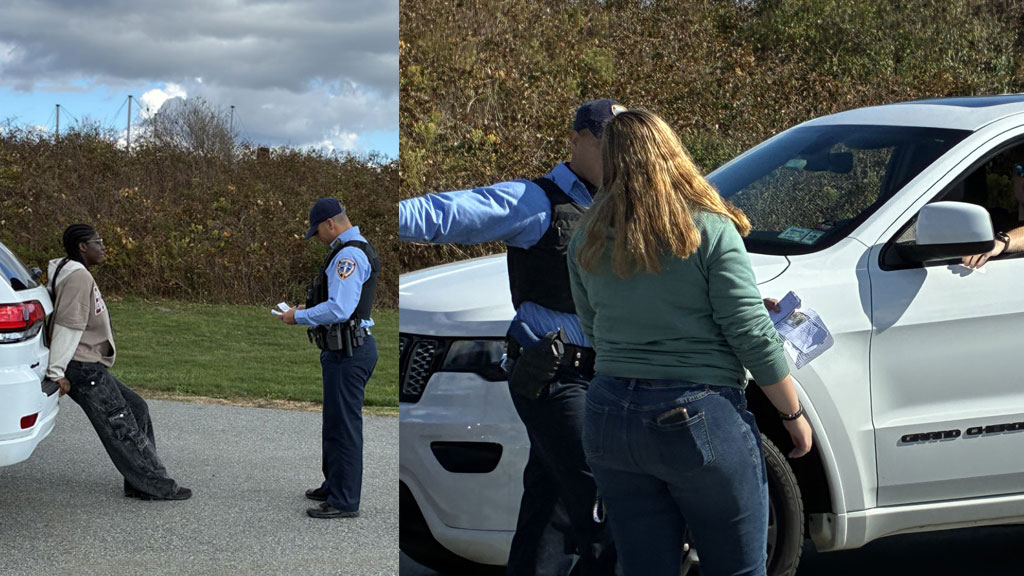
McPartlin credits Assistant Professor Barbara Frazier for alerting her about the opportunity. “She was able to share it with me since I was in her class and also, as my faculty mentor, she is always encouraging her mentees to gain hands-on experience. She worked with other CJ professors to plan this experience for students, and they provided transportation, which was very helpful for me. The experience was only for a day, but I will definitely be attending it next year.”
What Skills She Finds Crucial in Criminal Justice
“I believe the most valuable skills for anyone considering Criminal Justice are being organized, having an open mindset and critical thinking,” says McPartlin. “Being organized helps with planning to obtain all your Work-Integrated Learning (WIL) hours that are needed for the three-year program. Being open-minded is very important in obtaining this degree since the professors will always challenge your opinion on CJ topics. For example, during debates you will be challenged and asked to give evidence to support your opinion.”
She adds: “Also, in CJ, almost everything is up for debate and with no ‘right’ answer, meaning you need to be able to see other people's views. To succeed you must think critically about topics such as the impact of restorative justice and retributive justice, because these are people’s real lives that we are discussing in class and will be handling in the future. I find myself becoming more confident while pursuing this degree because you have to defend and explain your side in class debates.”
What’s Ahead for McPartlin
She’s already putting plans in place to pursue degree-related work. “This summer I will work as a paraprofessional at an elementary school. I can apply this experience to my work-integrated learning hours, as I will be connecting with the community,” she explains. “As a student in the three-year degree program, I need 600 hours of service, a minimum of 300 paid, in order to graduate. My experience at Camp Varnum went toward those hours, too.”
“I also plan to work part time at an autism learning center in the fall, since learning communication skills with children will be helpful for my future career of being a forensic interviewer,” she adds. “I learned about this position at a learning center through the JWU Job Fair. I also hope to intern at the Department of Corrections during my time at JWU. I’ll be able to use all of these experiences toward my WIL hours."
Related Posts

Arts & Sciences
Alumni