Culinary
Alumni
Hospitality & Business
Culinary
Health & Wellness
Alumni
Meet the Nutrition Pros Powering the LA Dodgers
As the MLB World Series Champions in 2020, 2024 and 2025, the Los Angeles Dodgers are considered a modern baseball dynasty. Off the field, there’s a common denominator for these championships — the team’s Manager of Performance Nutrition Tyrone Hall ’05 and Head Performance Chef Kristen (DeCesare) Loiacono ’16. Both are alumni of JWU’s Culinary Nutrition program.
This dynamic duo is responsible for fueling the Dodgers throughout the regular season and playoffs. Hall joined the team in 2016 and Loiacono arrived in 2018. Soon after, the Dodgers won their first championship in 39 years, had a record-breaking regular season in 2022 and then won back-to-back championships in 2024 and 2025.
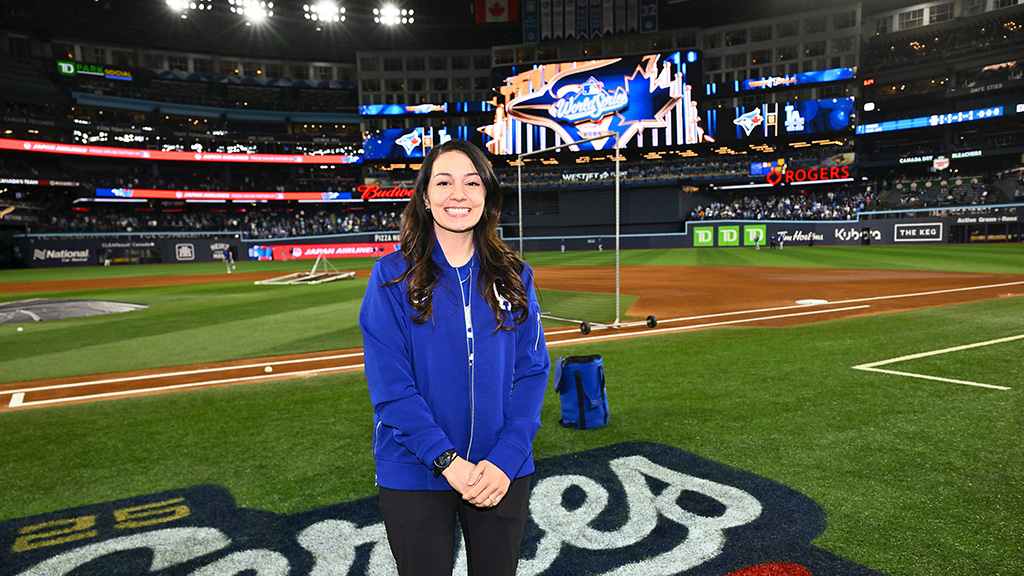
Though they’ve become accustomed to seeing their team succeed, winning never gets old. “Watching Game 7 in Toronto in the visiting clubhouse was absolutely one of the most thrilling moments of my baseball career,” said Hall of the team’s dramatic victory in extra innings on November 1, 2025. “I've been doing this for 10 years now and I've never experienced a range of emotions like I did in that game.”
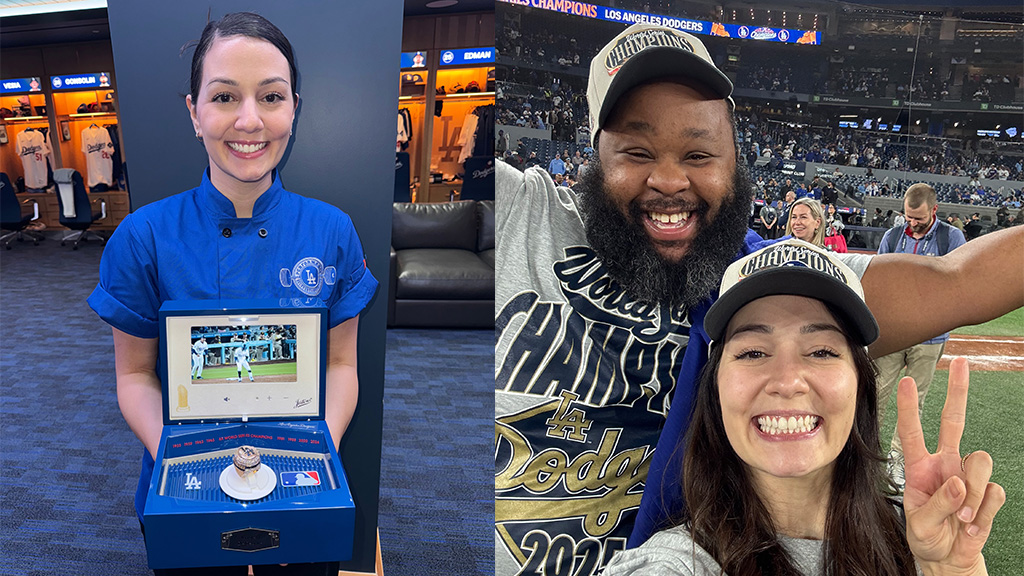
“It’s still something I am processing,” adds Loiacono. “About 15 staff members were in the dining lounge, frozen and glued to the TVs. When we won, the room erupted with cheers, high fives and hugs — then we ran to the field to meet the team. It was pure joy, gratitude and excitement. It’s one of those moments you tell yourself to fully take in and remember forever.”
Their emotion and gratitude are warranted because, even though they aren’t the ones swinging the bat or catching the ball, Hall and Loiacono are still part of every step of the team’s journey — from spring training in March to the nail-biting playoffs in October.
Inside the LA Dodgers Kitchen
When the team heads to Arizona for spring training, a catering company manages the day-to-day food operations so that Hall and Loiacono can work one-on-one with players on the Dodgers and their affiliate teams. “I focus on meeting with new and returning players, reviewing fuel and supplement regimens, and analyzing blood work to set baselines for the season,” says Loiacono.
“Minor league players need more guidance with their nutrition,” adds Hall. “We are teaching them the fundamentals of nutrition and how to structure their eating routine on game days for performance and recovery. Then, as they get into the majors, we start to fine-tune their programs and change diets for return-to-play plans or to extend longevity.”
Once they return to LA to start the regular season, Hall and Loiacono work as a two-person team to oversee everything that happens in the kitchen, from ingredient procurement to end-of-shift cleaning. Hall also handles budget management, catering logistics and dietetic counseling for players. On home game days (there are 81 of these), the pair can expect to be there for at least 15 hours.
“Most of the time we get to the field at 9am to start preparation for lunch," Hall says. “That usually includes two proteins, two carbohydrates and two vegetables. We also set up a fruit bar, salad bar and sandwich bar.”
The first service starts at noon, but while they’re batch cooking lunch, they’re also starting prep for the pregame service at 5pm. “We will lean on a build-a-bowl menu that allows a lot of variety,” Hall reveals. “Our goal is to provide the nutrition that they need before the game with a dash of what they want. On certain days we’ll also have somebody come roll sushi for the team. It is always a hit!”
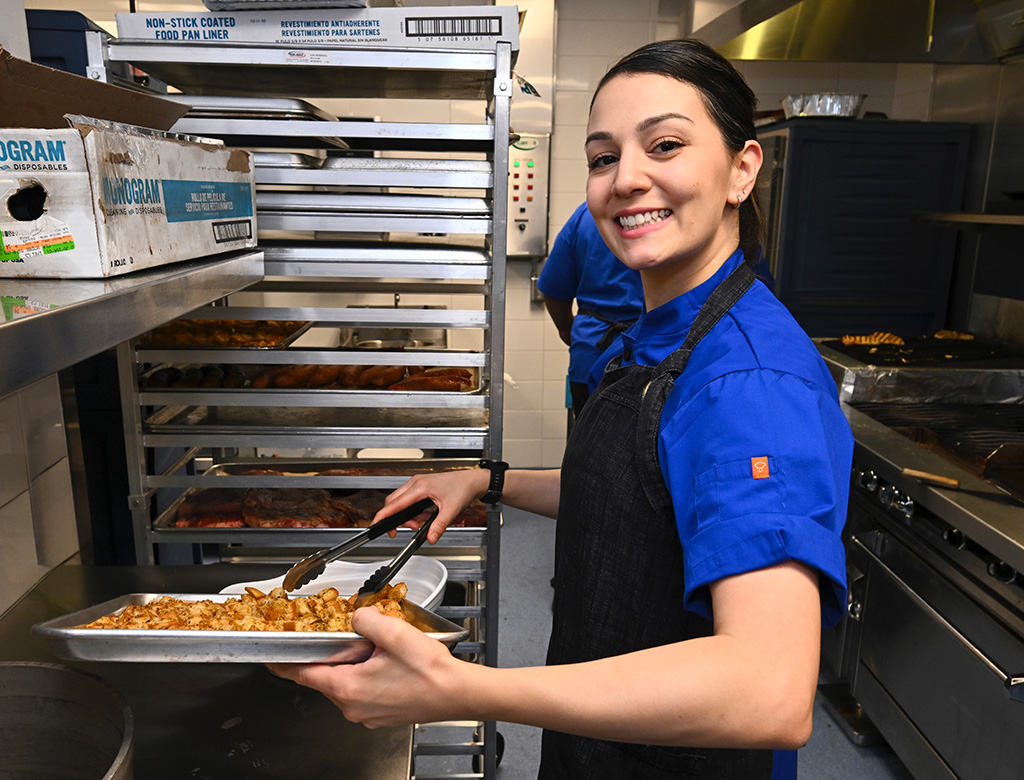
While players are enjoying the pregame meal, Hall and Loiacono switch to prepping for the post-game meal, which happens anywhere from two to three hours after the 7pm game start. “Dinner is usually hitting the table around 9:30 or 10pm,” says Hall. “Some guys will eat at the field, but a lot of them pack up boxes to go home.”
“What is most interesting to me is how routine-driven players are,” Loiacono notes. “We know what each player likes and dislikes, what they prefer to eat when they walk into the clubhouse dining area and, for pitchers on their start day, what their go-to meals are. When they arrive, we already have their preferred meal ready, which helps them stay focused on the game.”
When the team heads out on the road, Hall and Loiacono can shift gears to focus more on menu development, nutrition consultations and procurement. And of course, they try to squeeze in some rest days when they can.
The regular season grind only escalates come playoffs, especially for a team that has made a habit of going the distance. “The energy changes during the playoffs completely,” says Hall. “There is a tension in the air — there's an excitement. A lot of the guys will start to eat cleaner. It's less about fun and more about achieving the final goal of winning the World Series.”
Both chefs agree there is one important rule for playoffs: no new menu items. “Our job is to keep food consistent and reliable, so that food is the least of the players’ concerns,” Loiacono says. Hall adds, “We're only making meals that are guaranteed to be liked by everybody.”
But to celebrate the 2025 championship win, the chefs planned a lavish post-game meal with a sweet treat for dessert. “It’s funny, because we cooked rib eyes and lobster tails, but for some reason, everybody coming down from the adrenaline of a win just wants a cheeseburger,” says Hall. “So, we made the cheeseburgers.”
The Path to Working in Sports Nutrition
Having three World Series Championship rings is just one of many things Hall and Loiacono have in common. Both grew up in families that loved to cook — Hall learned the basics from his father and grandmother while growing up in North Carolina, and Loiacono learned by watching her papa and great-grandmother in Rhode Island. They both also realized they wanted to pursue a career in food while in high school.
“My first passion was actually baking and pastry,” Loiacono says. “I was always baking for friends and family, taking cookie orders at school, making birthday cakes on weekends and baking for holidays. I loved the science behind baking and once dreamed of owning my own bakery.”
While in a culinary career technical program offered at her high school, she learned about JWU from an instructor who was an alumnus. The Baking & Pastry Arts associate program was a natural next step for her, but the experiences she had at JWU ultimately changed the course of her career goals.
“As a cross-country student-athlete, I began to see how cooking my own nutritious meals could directly impact my performance,” says Loiacono. “I loved the idea of making food that was both delicious and purposeful. Studying abroad in France was a turning point for me and deepened my appreciation for food culture — that experience helped clarify that I wanted more than baking alone. I found that the Culinary Nutrition program would allow me to blend culinary creativity with nutrition and performance to build a career where food could play a meaningful role in supporting athletes.”
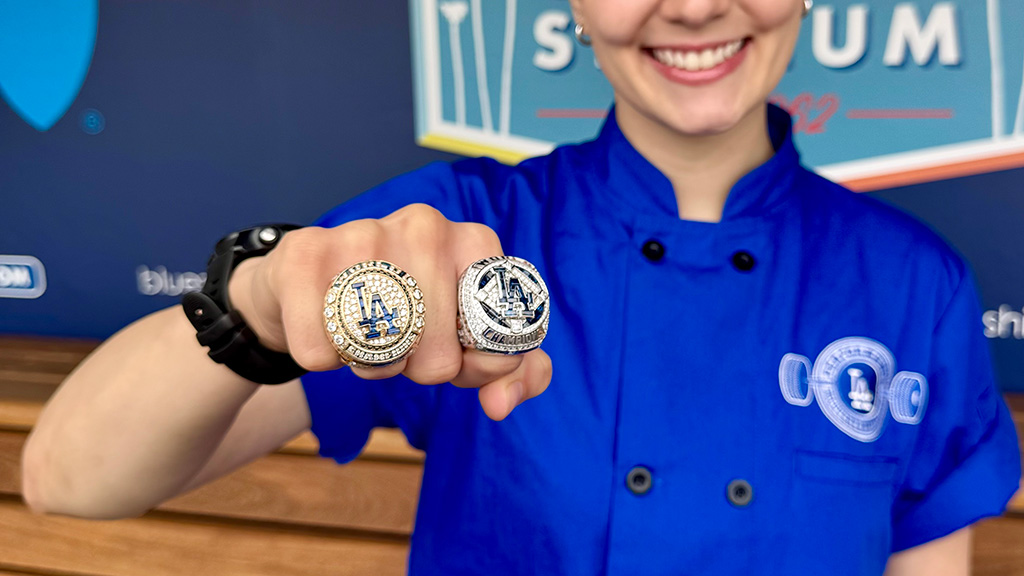
Hall’s path to JWU and focusing on nutrition was very similar. “I didn’t realize cooking could be a career until high school, when I was in the middle of a senior thesis class about food and culture,” he says. “My project for the class included a cooking component every night based on the regional cuisine being researched. I was all in on the food journey from that moment on.”
With this new-found passion, Hall began to explore his college options with his guidance counselor. JWU was at the top of the list and offered the flexibility to explore different paths, making it the perfect choice for Hall.
“I didn’t even know about the nutrition side of things until my first year at JWU,” says Hall. “The Intro to Nutrition course put the hooks in me — the science of it all was fascinating. And then I learned you could make brownies with black beans! It was all a series of discoveries.”
That love of experimentation and exploration guided both Hall and Loiacono throughout their time at JWU — even though they attended the Providence Campus nearly a decade apart. Graduating from JWU in 2005, Hall spent some time in the field as a chef before earning his master’s degree and getting his Registered Dietitian (RD) license. He then worked with the Denver Broncos and North Carolina’s Durham County Department of Health before landing his current role with the LA Dodgers in 2016.
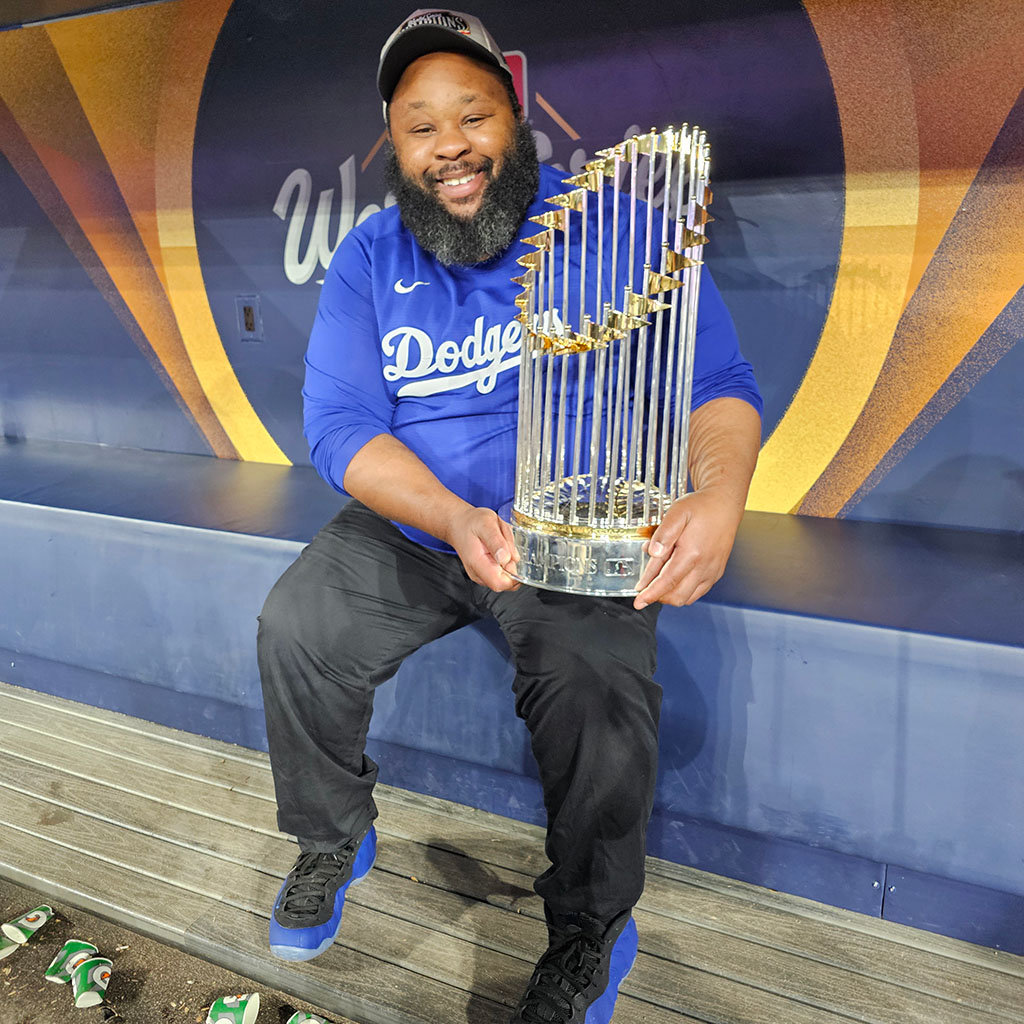
In that same year, Loiacono was graduating from JWU and continuing on to earn a master’s degree and RD license. She then took the leap and moved across the country for a culinary assistant internship with the Dodgers in 2018, which eventually evolved into her current full-time role.
“I was so grateful to work alongside a fellow JWU alum and reflect on the shared experiences that helped shape our careers,” says Loiacono. Together, she and Hall have become a well-oiled machine, and they both agree that their time at JWU gave them the foundation to have confidence in the kitchen and beyond.
“Work on your soft skills because that is an important skill set. You can spend years in the kitchen working on knife skills and developing recipes, but if nobody wants you to be part of their team to work towards something bigger, it will be hard to advance in your career.”
“The hands-on learning environment at JWU made me a professional who can think critically, adapt quickly and work confidently under pressure,” says Loiacono. “I still rely on the problem-solving, organization and communication skills I developed through my culinary labs and nutrition coursework. That foundation has helped me navigate challenges in my career and trust my training in fast-paced environments.”
And, for those interested in working in a fast-paced environment like that of a pro sports team kitchen, Hall and Loiacono have some important advice.
“Build out your networks and spend time with the professionals you have access to,” says Hall. “Also, work on your soft skills because that is an important skill set. You can spend years in the kitchen working on knife skills and developing recipes, but if nobody wants you to be part of their team to work towards something bigger, it will be hard to advance in your career. You need a team to get things done, so learning how to work in those environments is key.”
“Be willing to sacrifice for growth,” adds Loiacono. “Working for a professional sports team is a very demanding schedule, but it is also incredibly rewarding. You may have to move, and you will miss some holidays and events [with family], but if you know this is where you want to be, it is worth it. Chefs who are registered dietitians are becoming increasingly valuable in sports nutrition, and I look forward to seeing more JWU students enter the field.”
Related Posts
Arts & Sciences
Alumni
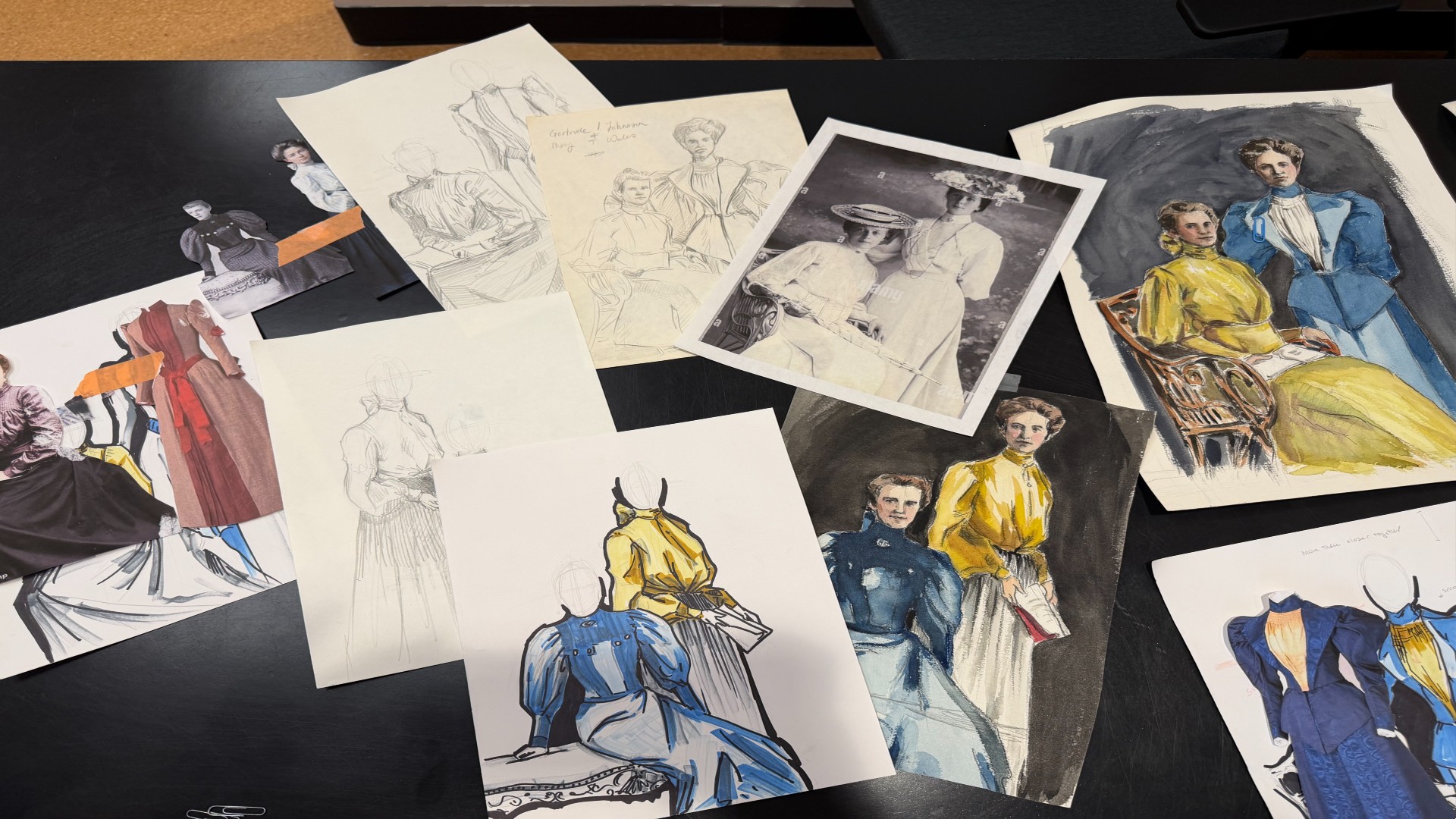
New Portrait Honors JWU Founders Gertrude Johnson and Mary Wales
Alumni
Hospitality & Business
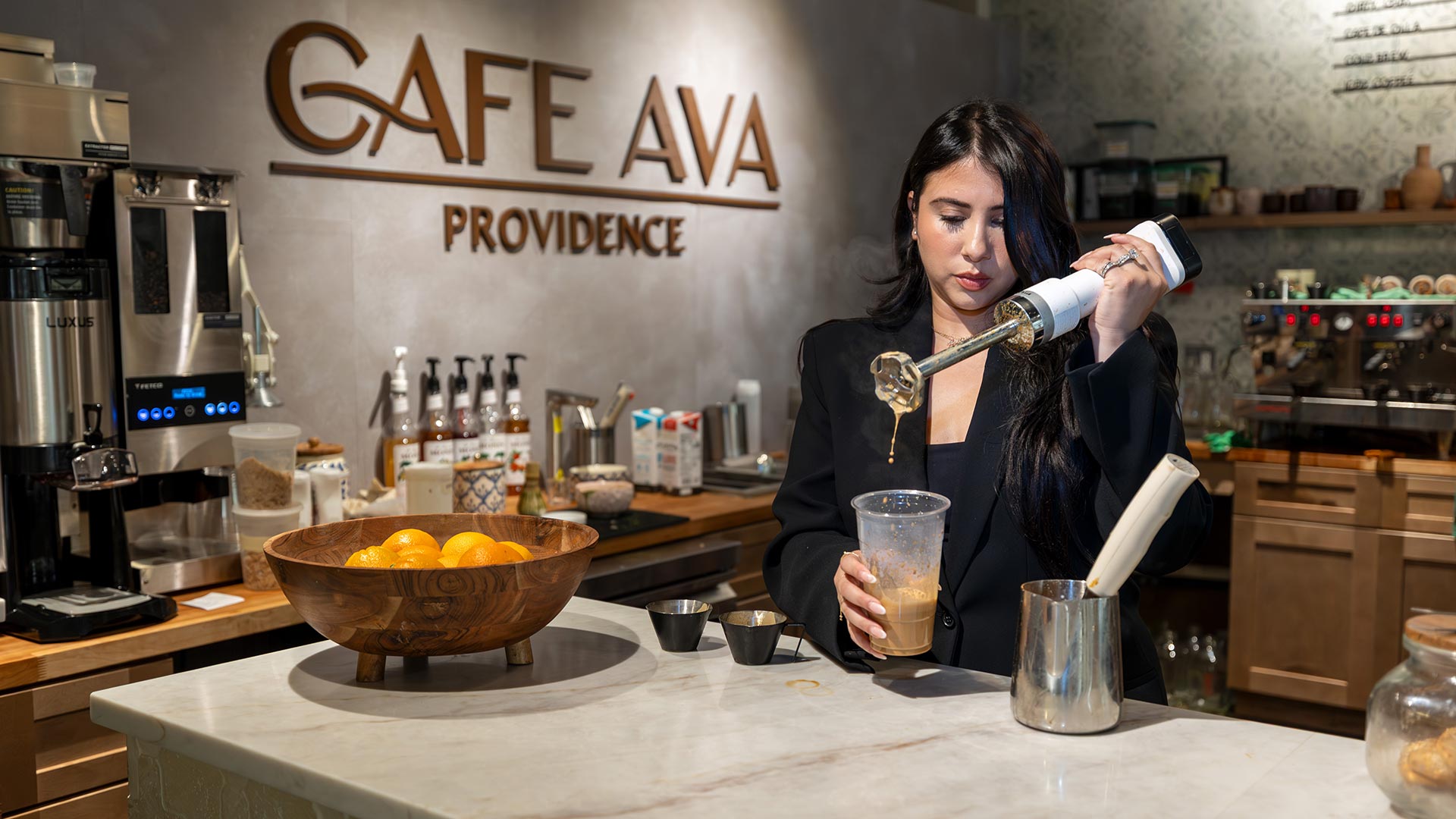
From JWU Student to Restaurant Owner: Andrea Cabrera
Culinary
Students