
Culinary
Alumni
Hospitality & Business
Students
Culinary
Health & Wellness
How JWU Gives Brown’s Future Doctors a Nutritional Edge
Food for thought: the recipe for better healthcare starts in the kitchen.
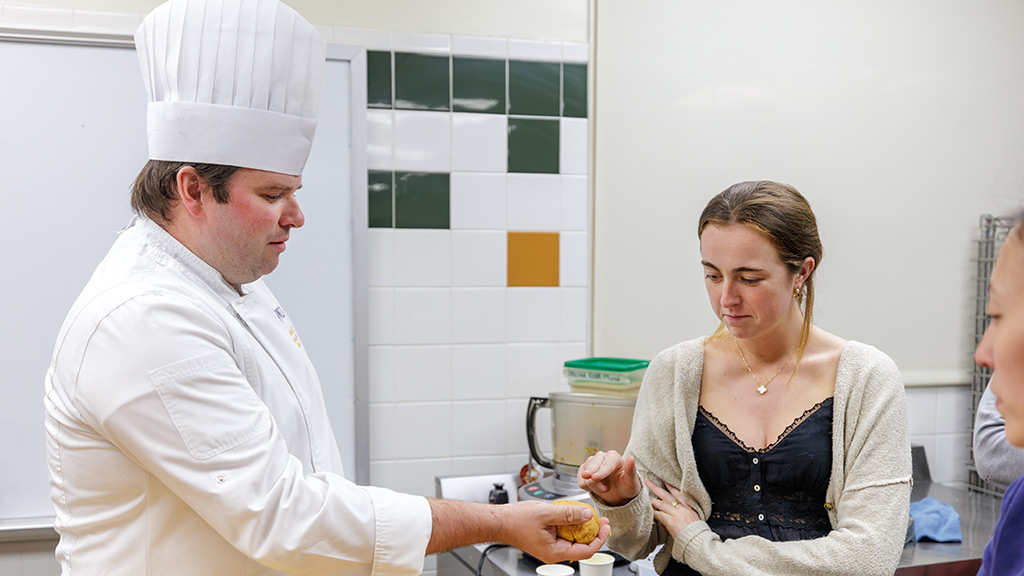
For more than a decade, students at Brown University’s Warren Alpert Medical School have learned how to treat patients better through culinary sessions held at Johnson & Wales University and led by JWU students. The future doctors take Food Is Health, a year-long, preclinical elective that bridges nutrition science, cooking skills and clinical practice.
Caterina Dong, who is starting her second year of medical school at Brown this August, remembers being sad that she didn’t get into the popular course while a Brown undergrad.
“It’s known as the best pre-clerkship elective (PCE) because you get to cook,” she states. “I was excited about it because I always wanted to learn, particularly in a more formal setting. Cooking classes can be expensive, so this was a great opportunity — plus it has a structure, with built-in times. You get to make friends in it, too! It was a great experience.”
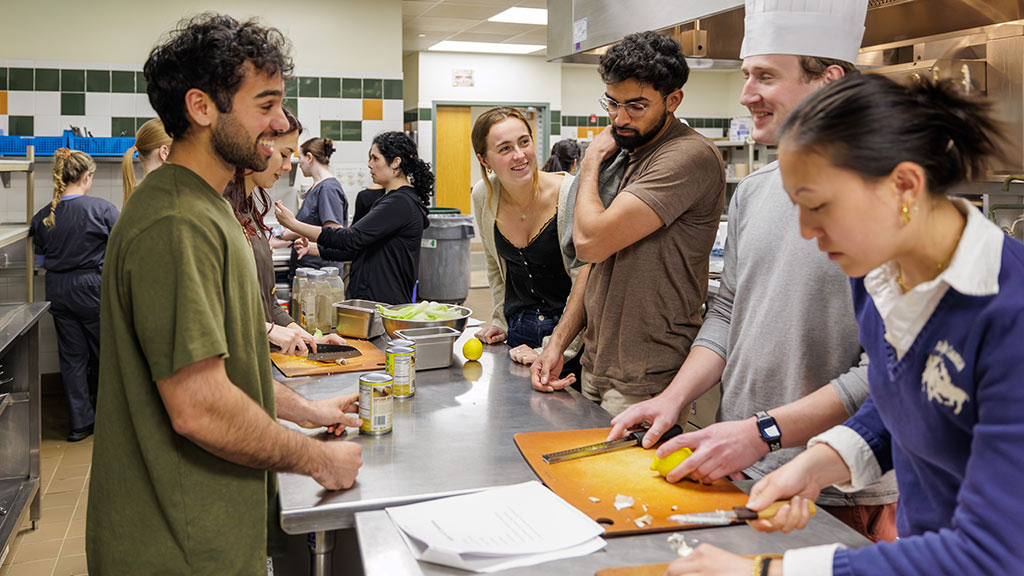
JWU students can also grow their nutritional knowledge to benefit future clients. “We run classes for Occupational Therapy Doctorate (OTD) students and M.S. in Physician Assistant Studies (MSPAS) students and, of course, for M.S. in Clinical Nutrition & Dietetics (MSCND) students, so it’s all full-circle,” says Associate Professor and Culinary Department Chair Michael Makuch ’03, ’05 MAT. “It stretches across our own institution.”
How a Celebrity Chef Helped Spark a JWU/Brown Partnership
It all started with an interest in preventative health. In 2014, Food Network star chef Dave Lieberman chased just that, trading his chef’s whites for a white coat by enrolling at Brown to become a physician.
Soon after, he contacted Makuch after seeing press about Makuch embedding cooking and nutrition into a biochemistry class as a guest lecturer at Tulane University in Louisiana.
“We’re right down the road,” Makuch recalls Lieberman saying. “Would you be interested in a partnership with Brown’s medical school?”
“It totally made sense,” says Makuch. “Rhode Island is so small; why would we NOT want to work together?”
A Clinician’s View of the JWU/Brown Partnership
Clinical Assistant Professor of Medicine Mariah Stump, MD, MPH, FACP, DipABLM, ABOIM, is a primary care physician on the faculty of internal medicine at Brown. For the last six years, she’s had another role: advisor to the Food Is Health courses.
“I love watching students’ progression from beginning to end and seeing how they incorporate the curriculum into their final project (a potluck dinner where they each have to contribute a dish of their own),” shares Stump. “It shows how they’re incorporating culinary skills not only for patients but for themselves, both in prepping food and in cooking.”
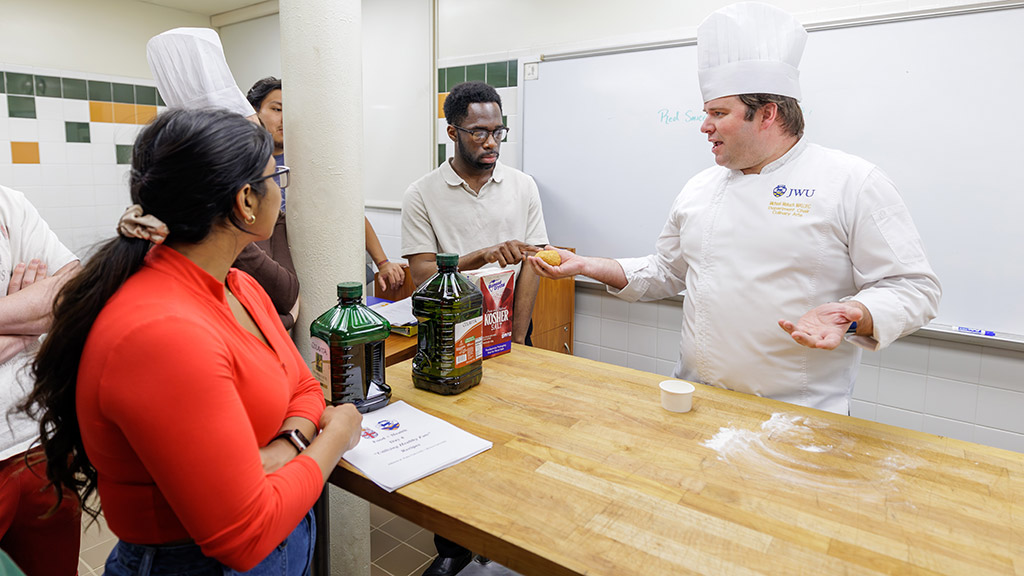
“[Makuch] has been instrumental in having that strong curriculum familiarizing students with the kitchen and with culinary skills,” she states. “The course is enriched with a clinical aspect, addressing topics such as heart-healthy diets and patients with diabetes and other medical conditions who need to modify diets. We’ve seen more clinical correlates, and we’re continuing to see students interested in the course.”
“We hope to continue the partnership, and I would love to see more JWU collaborations through different aspects of medical school beyond this elective,” says Stump.
JWU Students Help Future Doctors Gain Nutrition and Cooking Skills
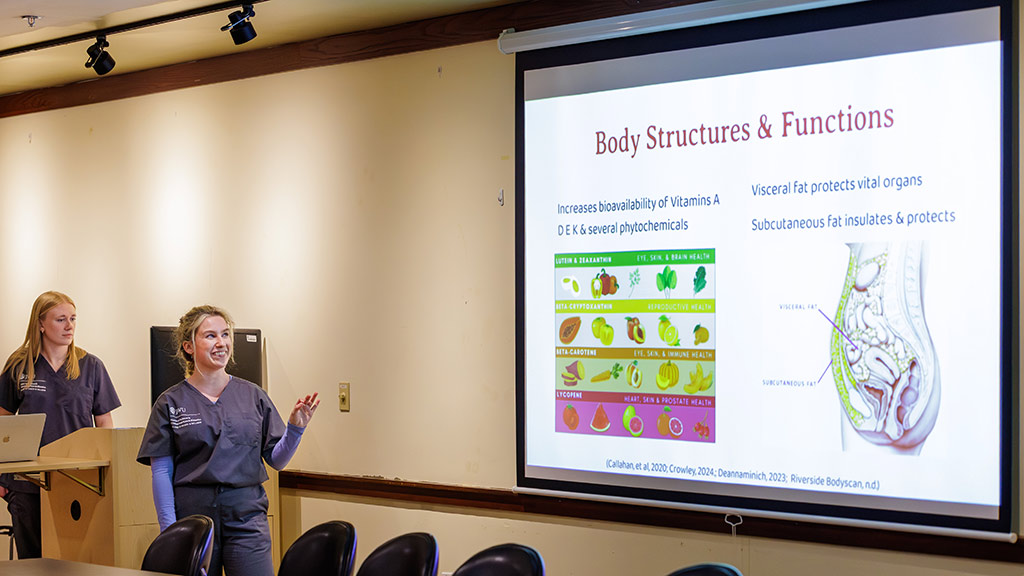
Lindsey Plumb ’27 MSCND and Anna Tobin ’27 MSCND were among the JWU grad students at the most recent Food Is Health session, where they presented on different types of fats and their health impacts before helping in the culinary lab.
“The Brown medical students get hands-on experience so that when they meet with a patient, they’ll know what they’re talking about,” Plumb notes.
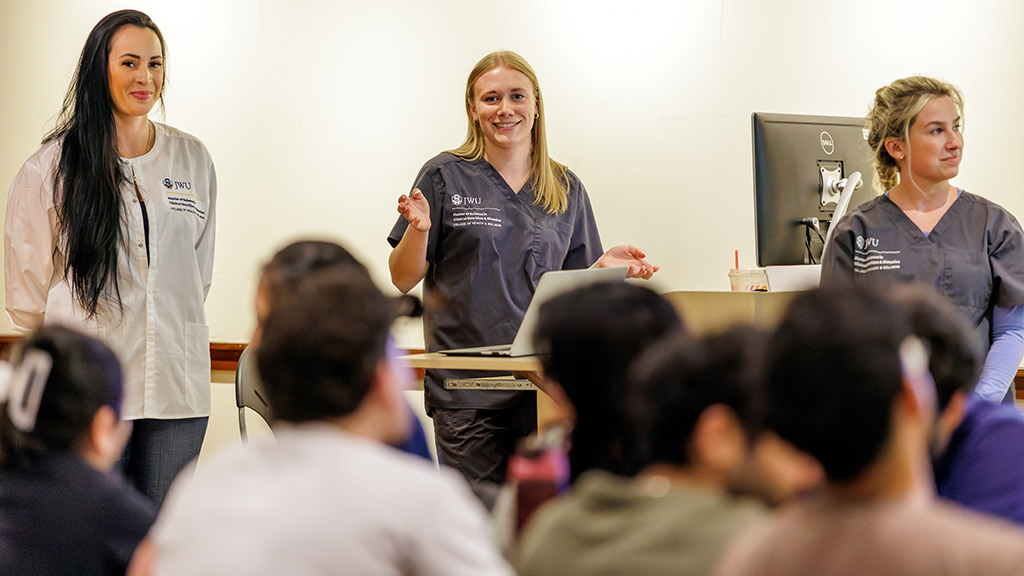
“For patients needing a low-fat diet, we substituted fat in brownies with black beans,” Tobin explains of how the medical students worked with fats. “We also built on the culinary applications, such as the smoke points when using different types of fats, and applying different methods, such as high-heat or low-heat.”
“By the end, the medical students had lots of questions and were very actively engaged,” Plumb observes. “Because they got hands-on in the kitchen, they seemed more eager and excited to learn.”
Lacking the culinary background of many of her peers, Plumb also had to learn in order to teach.
“We all got an overview of what to do,” she notes. “We help them with decision making, such as which oil they would choose to cook with, and make sure they understand knife skills and food safety as well as how to use the kitchen equipment. Now that we’ve done our food service rotation in the program, I feel much more confident.”
“It was a really great experience,” expresses Tobin. “I think anytime you can learn more about someone’s role in the healthcare team, you gain a better understanding of the role they play in a patient’s care and have a better appreciation for it.”
A Brown Medical Student’s View of Learning at JWU
After completing Food Is Health in the fall, Dong became one of Brown’s medical student leaders for the spring session. She helped to coordinate times and to co-organize didactics about choosing nutritious options, whether exploring a grocery store in Central Falls, reading nutrition labels, or holding a potluck where students need to come up with recipes that incorporate techniques they learned this semester.
Her biggest takeaway: how easy cooking can be.
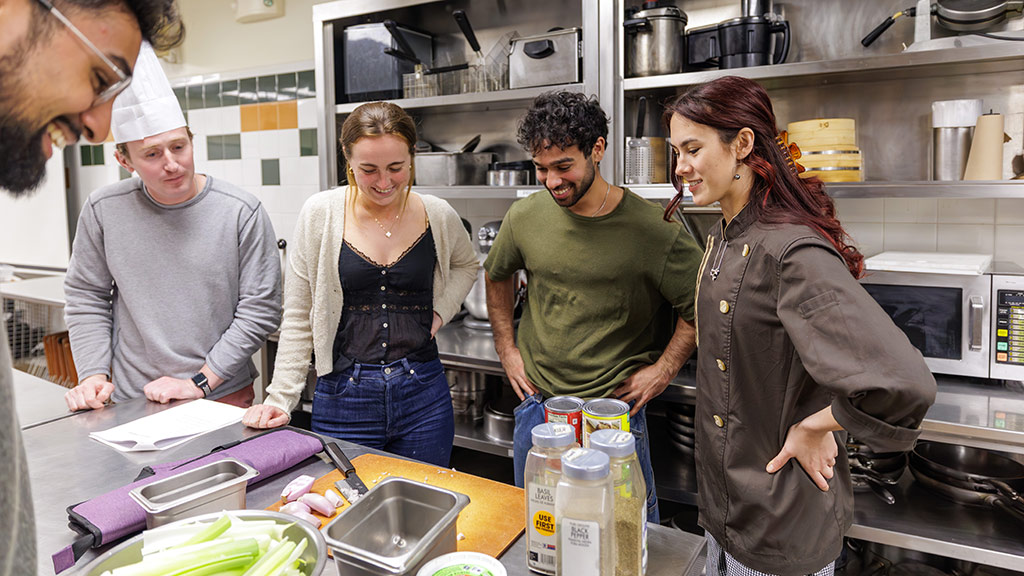
“Chef Makuch immediately taught us how to debone a chicken, as well as skills like chopping, different ways to prepare foods, oiling, sautéing, grilling, frying, all those things,” she shares. “I’d wonder how you’ll get a meal out of disparate ingredients — but by the end of the session, we always do! It’s taught me that I’m more capable than I think as a cook; it’s a different skill but becomes second nature. You’ll just start chopping something, and you build a repertoire of recipes you can go back to. I incorporate the techniques I learned into my own cooking.”
“It also taught me how fun it is to cook with other people,” adds Dong. “At home I don’t like other people in the kitchen, but Food Is Health taught me to trust what other people are doing as well.”
How Understanding Food & Nutrition Produces Better Patient Outcomes
“It’s one thing to tell medical students that food is medicine, but another to give them skills to practice it and empower their patients on how to do that,” Stump observes. “It’s how you incorporate health into food, how to chop veggies — skills that we’re not great as a society at teaching. If patients don’t eat those foods in their families, they may not have learned to cook and prepare them.”
“Healthcare professionals who gain a better understanding of nutrition also lead healthier lifestyles themselves,” notes Makuch. “This is so different from what they’re studying at Brown, and it’s nice to see the medical students’ stress melt away in the kitchen.”
Tobin notes, “Healthcare providers better understand our role as nutritionists when they know how to adjust meals to fit a diet instead of just learning what’s a good or bad food.”
Adds Dong, “There should be more understanding that nutrition looks different for everyone. We have dietary recommendations, but there are nuances due to cultural differences. Practitioners need to account for the fact that food is a vessel through which immigrants stay connected.”
What’s Unique about the Brown/JWU Partnership — And What’s Next
“This has been a great opportunity to collaborate with healthcare team members,” Plumb says. “They already have some knowledge of the biochemistry of fat, so I could adjust the presentation for them. Going into the field, talking to doctors won’t be as intimidating because now I have some experience communicating with them and even teaching them something.”
Makuch agrees about the benefit of collaboration: “We know that food brings people together. We’ve grown beyond one elective class; today, we embed culinary experiences into Brown’s medical education. We address the entire medical school in one sitting, which has expanded into a mainstream experience for them. Our relationship with Brown also provides opportunities to engage in further research, such as on the link between planetary health and patient outcomes.”
Stump envisions the partnership growing even more: “Our hope is to develop more of a food insecurity piece with JWU that talks about sustainable gardens and urban gardening — how to incorporate food into the lives of patients who come from different backgrounds and are socioeconomically diverse. Dietitians and nutritionists are so much a part of our teams, and food as medicine is so much a part of what medical students do.”