Culinary
Alumni
Hospitality & Business
Health & Wellness
Culinary
Building Healthy Habits: JWU Celebrates National Nutrition Month
As National Nutrition Month draws to a close, here are just a few of the ways Johnson & Wales University has brought healthy habits to the community, championing informed food choices and how they’re good for your body.
M.S. in Clinical Nutrition & Dietetics (MSCND) Students
Future registered dietitians in the M.S. in Clinical Nutrition & Dietetics (MSCND) program spent March dishing out knowledge on making healthy and informed food choices — one bite-sized tip at a time. The students practiced one-on-one nutrition counseling sessions before opening sessions to the greater public, sitting down with JWU faculty, staff and students to discuss their diets and habits and how they could be improved. In addition, the students held weekly activities in campus dining halls, teaching people myths and facts about nutrition and fad diets, debunking common misconceptions, helping participants build meals with nutritional value, connecting people with on- and off-campus food resources and teaming up with JWU Campus Dining to offer a hydration station with different flavors of Liquid IV.
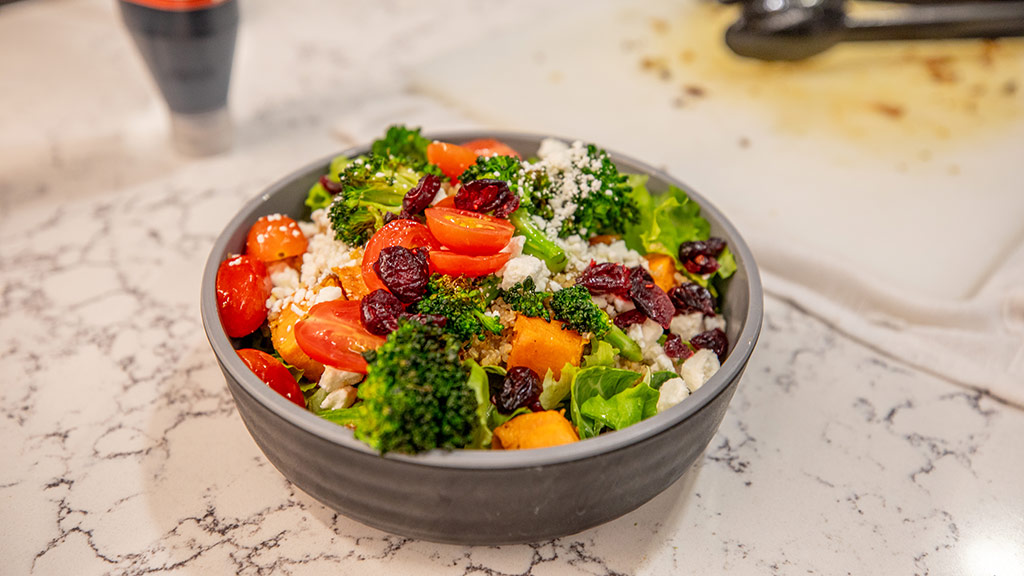
Ytossie Graves ’24, ’26 MSCND, who earned her B.S. in Dietetics and Applied Nutrition (DiAN) at JWU, feels that nutrition should be individualized, noting, “What works for one person might not work for another person, so you want to create a good relationship with food that works for you and your family. And I know we’re talking a lot about nutrition, especially this month, but health isn’t always about food, either; it’s multifaceted. Your sleep is important, for instance; there are lots of good habits you could pick up that go beyond what’s on your plate.”
Kelly McCormick ’22, ’26 MSCND, another JWU DiAN alum, is excited to become a registered dietitian. Her advice: “Everything in moderation. You don’t have to starve yourself, you can have rewards, but you also need healthy foods for balance. We don’t realize how much micronutrients such as copper and iodine in our diets can help us digest and metabolize carbs, proteins and fats. Also, try out new foods! People avoid healthier foods because they think they don’t taste good, but they might be shocked at how tasty health foods can be.”
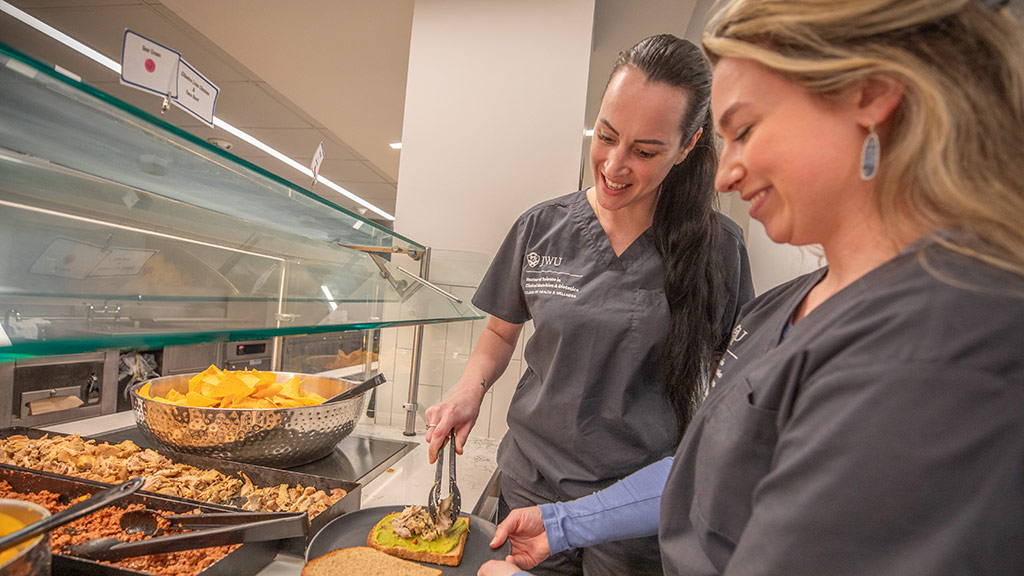
Since returning to JWU for her graduate studies, Alyssa Bernier ’24, ’26 MSCND has learned to read packages, be more aware of what’s in food and eat more grains. “Nutrition isn’t as scary as you might think, and green isn’t bad!” exclaims Bernier. “People associate nutrition with what you can’t eat or with restrictions rather than fun things, but there are all different ways to be nutritious or get fiber. I’ve loved setting up in dining halls and educating people this month, especially because college students have a higher incidence of eating disorders; we can spread good info without being scary and make nutrition knowledge more accessible. I know people can be wary of veggies, but I love them and encourage people to try eating a rainbow of colors. Healthy food doesn’t have to be gross!”
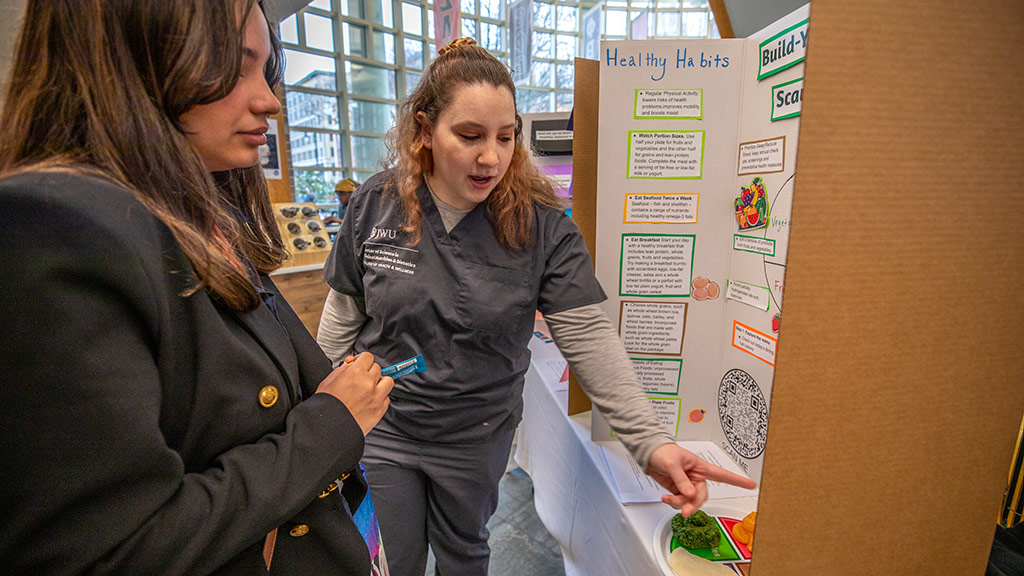
MSCND students also put their knowledge to the test by appearing on Culinary Now, a podcast hosted by Associate Professor Jaime Schick, M.Ed., CEPC, and Assistant Professor Matthew Britt, M.Ed., CEC. Tune in to hear how they approach coaching people on positive food habits.
Culinary Nutrition Students
This month, JWU Charlotte students in the Culinary Nutrition B.S. program focused on a Personal Nutrition Project (PNP) to empower others to benefit their health and well-being.
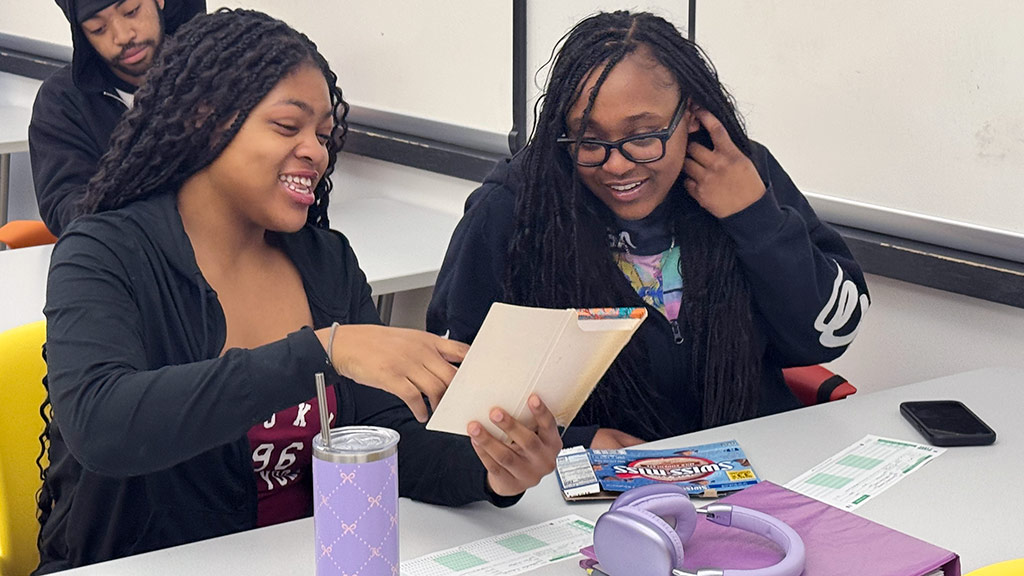
Emily “Charity” Brinson ’28 decided two years ago to be more intentional with her health: “Going into my nutrition class I had already began counting calories, tracking my protein intake and increasing my fiber, so I was excited to see what my body specifically would need in an in-depth way. I was shocked by my results after tracking my food for three days. I found that I was eating significantly fewer calories to stay at my maintenance weight than I needed to, was not eating enough fiber and was overdoing my protein. This PNP has opened my eyes to realistic macro- and micronutrition intakes and made me aware of the vitamins that my food has and what I can be eating more of to increase my overall health. Now I read labels for things like potassium and magnesium instead of just calories and protein.”

“I think it’s important for people to be aware of the many variables that come into play with nutrition,” says Esther Kim ’28, who grew up cooking with her grandmother and considers food a love language. “Especially on social media where misinformation is prevalent and facts are oversimplified to be consumable, there is rarely a simple answer to anything. You have to dig deeper. Once you learn the science of how your body works and reacts with certain foods, it opens up a level of certainty and empowerment. Nutrition is attainable and can be enjoyable, and learning about how your dietary choices affect your body will always be important and relevant.”
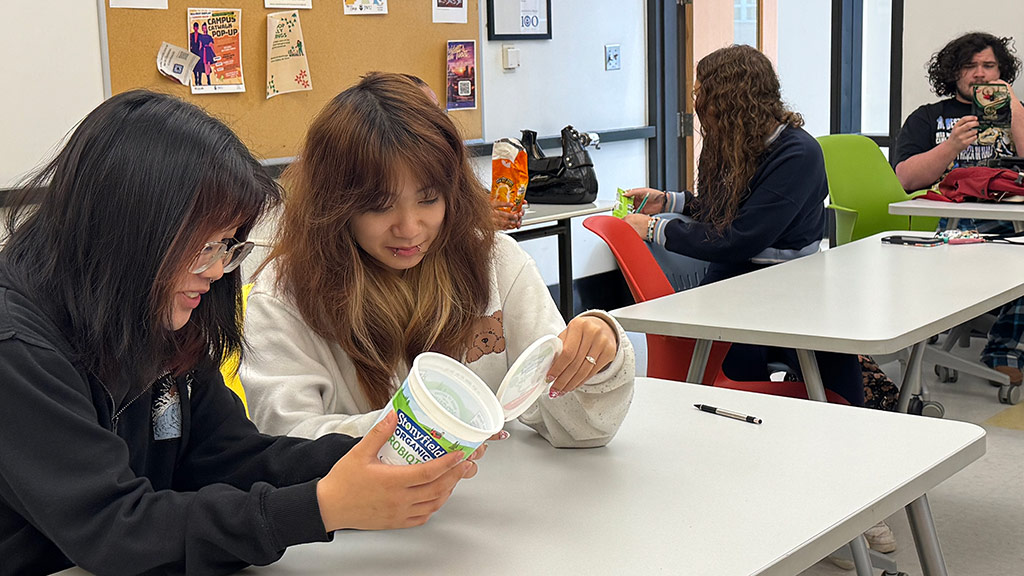
On her path to introducing healthier snacks and meals into the food industry and helping people feel good about eating, Kim credits the PNP for helping her understand nutrition at a scientific level. “JWU goes into depth about the different variables when it comes to making the best dietary choices, from your micro- and macronutrients, what to avoid, what is essential to your body, calories and basic anatomy. The project was truly valuable to me because the unique software and methods of analysis are not something you can find in your day-to-day life. Tracking every single meal for three days, inputting it into ESHA and being able to analyze exactly how I did with my nutrition has been incredible. With the knowledge of how your body reacts when you are lacking or overconsuming something, paired with software that can pinpoint exactly what you need, you can truly take control of your own health; that has been the most eye-opening part.”
Doctor of Physical Therapy (DPT) Students
Wait a minute: if my physical therapist can improve my mobility and reduce my pain, why would I need to care about what I eat?
“Nutrition plays such an important role in long term health outcomes that clinical providers must understand the basics of nutrition and how to screen for nutrition in their patients,” explains Associate Professor Meredith Young, PT, DPT. Thus, JWU’s Doctor of Physical Therapy (DPT) students get a holistic view of healing through their Food as Medicine course, which takes advantage of JWU’s long history of culinary excellence for a truly hands-on exploration of nutrition and dietetics. “The goal of the Food as Medicine lab is to demonstrate that a healthy meal can be affordable, easy to make and culturally appropriate,” Young adds.
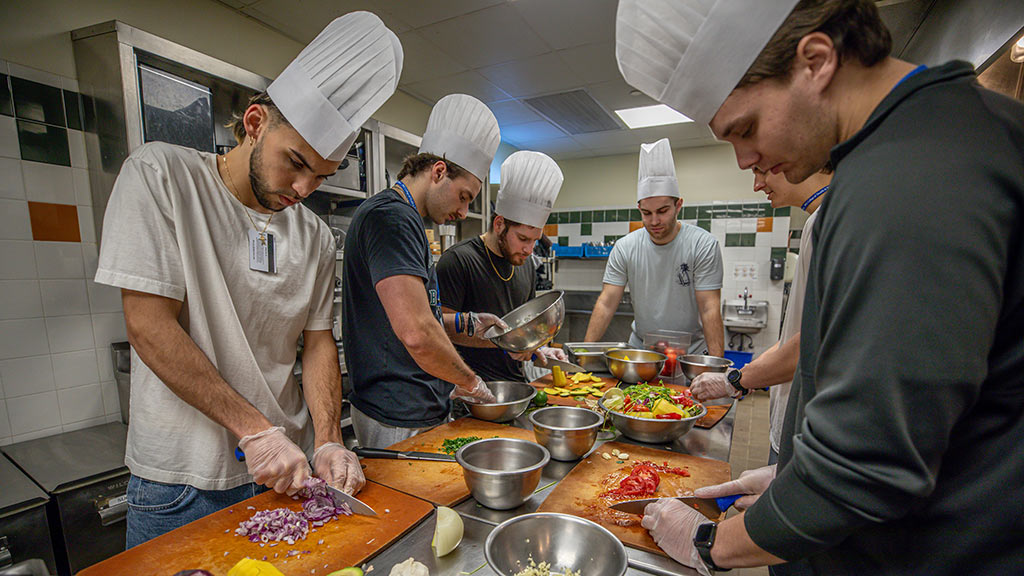
DPT candidate Tatyana Boiano ’27 notes that it can be hard to identify a “healthy” diet amid changing descriptions, explaining, “We can all recall different food pyramids over the years, and they are all different from today’s pyramid on MyPlate.”
She says she appreciated the Food as Medicine course because she learned how to minimize waste and decrease calories in cooking while identifying and avoiding processes that take away nutrients our bodies need.
“We learned that when people say food is medicine, they aren't being overzealous at all,” she shares. “Genuinely, the food we put in our bodies is our fuel, which is why what we eat matters. There are certain foods that promote bone growth and retention (foods with Vitamin D & calcium) and foods that decrease inflammation within the body, putting it in an overall calmer and healthier state.”
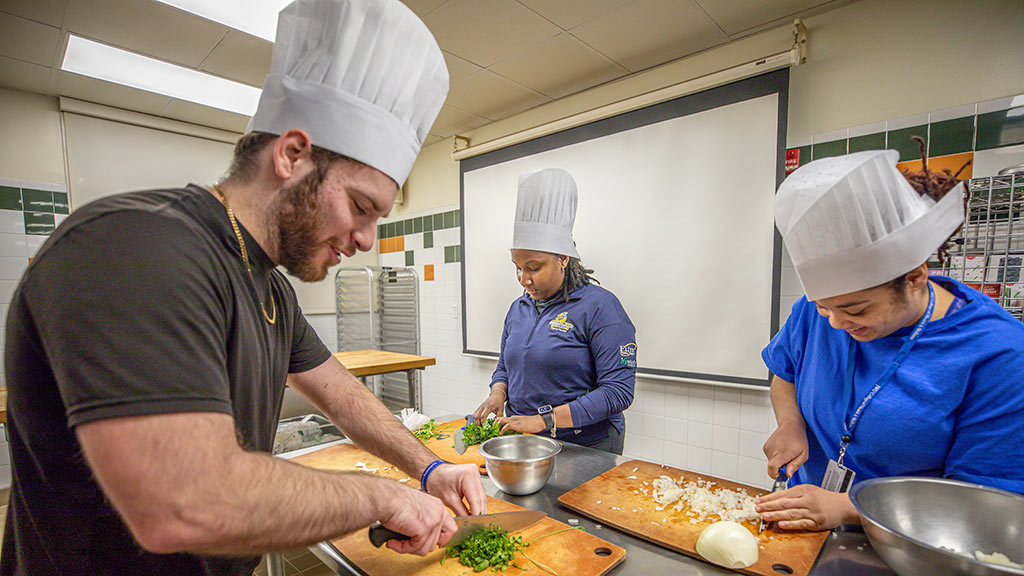
Boiano also loved the cultural experience of cooking and eating with others. “I feel like there are lots of people focused on bettering their health that believe food needs to be bland to be healthy. But cooking healthy and hearty foods at home with seasoning is (in my opinion) easier than ever for those with access to a kitchen, ingredients and technology.”
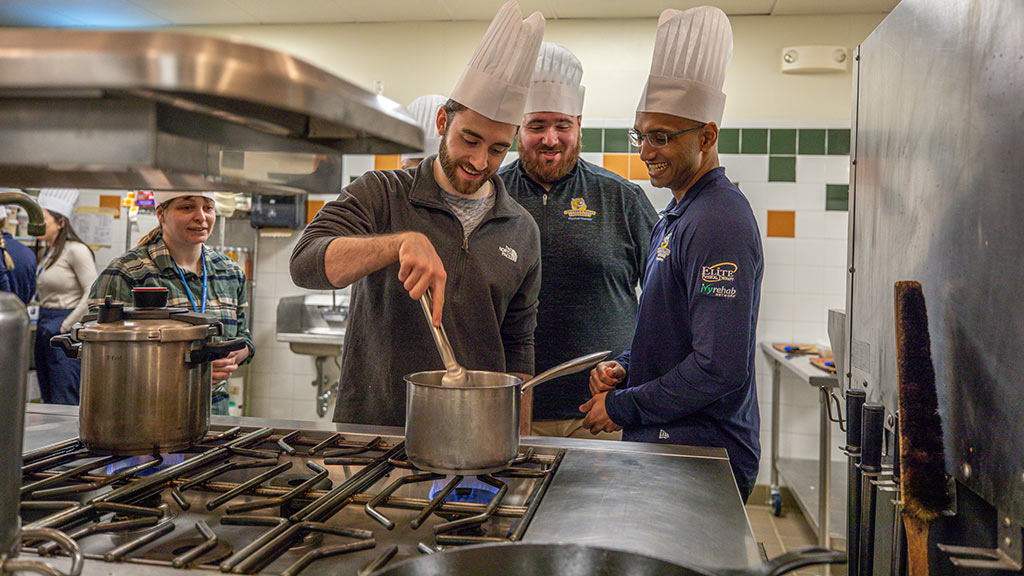
DPT candidate Siddharth Koka ’27 added his own learned knowledge from his JWU studies: “Nutrition and physical therapy go hand in hand in the logical ways of fueling and building our tissues but also in the fulfillment of participating in our communities. Not being able to actively take part in the communal practice of cooking, eating and socializing around meals can severely affect people's well-being and their recovery. As physical therapists we must be aware of what food our patients are eating but also who they're eating with and how they're eating.”
JWU Nutrition Society
Nutrition matters all year — not just during National Nutrition Month — and the JWU Nutrition Society, a student-run club in Providence, aims to help the JWU community learn the connection between food and health. Nutrition Society president Ashley Kulp ’27 and vice president Eliana Glusman ’27 are both Dietetics and Applied Nutrition (DiAN) majors who carried an early interest in nutrition to JWU. “Personal health issues such as food allergies and GI issues prevent me from eating a lot of foods, so nutrition is integral in my life,” Glusman explains. “JWU’s culinary labs were very appealing for someone like me who’s obsessed with food, and when I got here I found the Nutrition Society and met people who see the importance of nutrition in some way. It’s a great place to meet other people, feel connected and be involved on campus.”
Kulp, who grew up as a picky eater, adds, “I learned there are little ways I can alter what I’m eating to improve my nutritional status, and now I can help people realize that as well, in a way other than cooking. I’ve found connecting to the science side of nutrition, like how food interacts with the body, meaningful. Instead of preparing a dish, I can explain how it benefits you. Plus, I get to spread nutritional knowledge! Not a lot of people think about it, but it’s simple once you get the hang of it.”
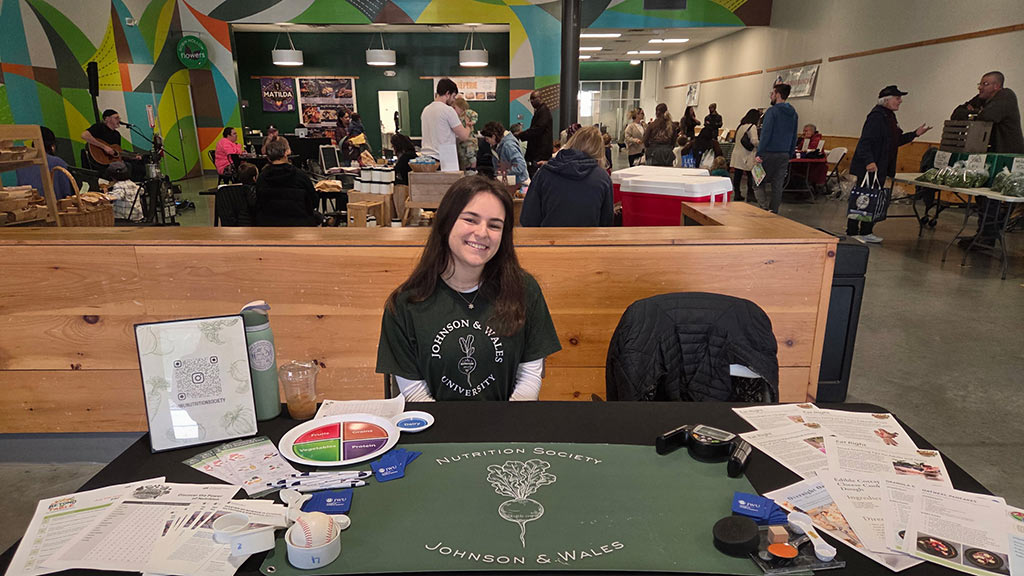
During March, the Nutrition Society set up tables outside Harborside Café to hand out quick, healthy snacks such as granola bars and to teach the basics of nutrition, such as demonstrating portion control through hockey pucks or decks of cards. Nutrition Society hosts fun, easy ways to learn more about nutrition, such as hummus-making workshops and “make your own pickles” events that teach about probiotics and the health benefits of fermented foods while encouraging students to experiment with flavor through dill, carrots, onions and shallots.
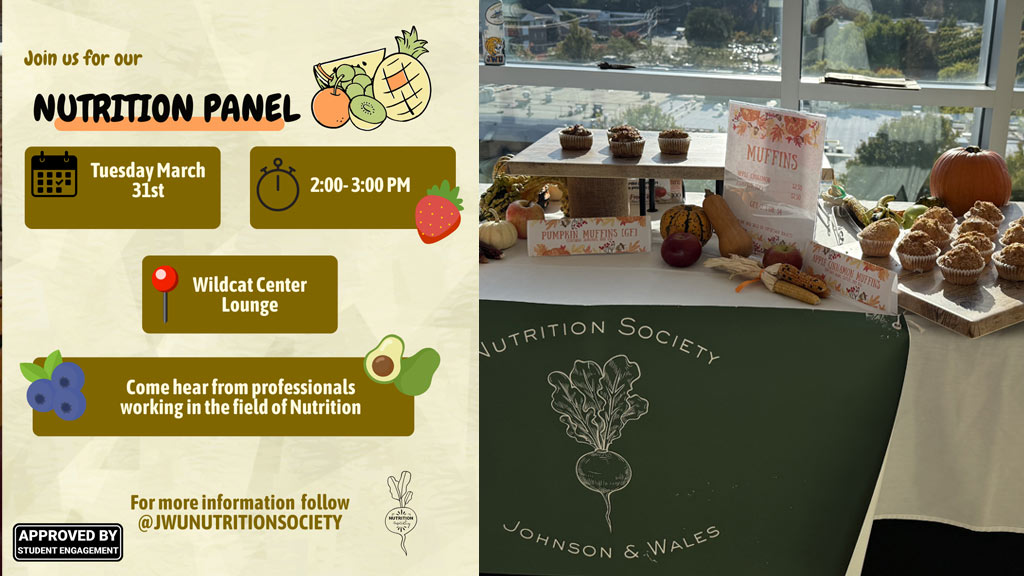
They also raise funds through a popular annual sale of homemade pickles and raise public nutritional awareness by tabling at off-campus events such as Farm Fresh RI farmers markets. On March 31, JWU Nutrition Society is hosting a nutrition panel from 2-3pm in the Wildcat Center Lounge, featuring professionals working in the field of nutrition. “We’re in classes learning all this stuff but can’t get to all aspects of the field, so having professionals speak is a great way to learn about it,” says Glusman.
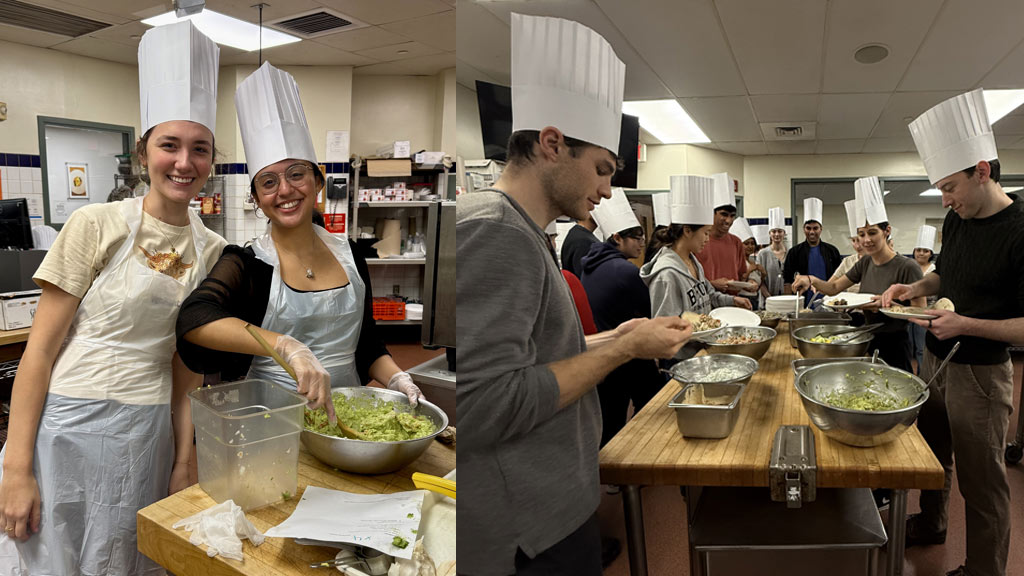
In April, club members will once again serve as volunteers for JWU’s Food + Health program, where Brown University medical students come to campus to learn culinary skills in our labs. “Doctors don’t always know how to prescribe food, and a registered dietitian can’t always be there to help them,” Glusman explains. “It’s important to help them gain knowledge of food relating to medicine.”
Related Posts

Culinary
Students
Johannah Evans Brings Passion to Scholarship Event
Hospitality & Business
Culinary
Experiential Education
Inside the Masters: Gaining Hands-On Experience at Augusta National
Health & Wellness
Students