Culinary
Alumni
Hospitality & Business
Culinary
Future Food Scholarship Showcases Student Creativity
July 2026 Update: The Future Food Scholarship is no longer being offered, but other scholarships, including culinary-specific ones, can be found here.
Imagine being dropped into an unknown kitchen environment and tasked with making your own recipe for a chance to win a full scholarship to attend Johnson & Wales University. Talk about a huge opportunity — and a daunting challenge. A few weeks ago, seven exceptional high school students proved their mettle by doing just that — and made lifelong friends in the process.
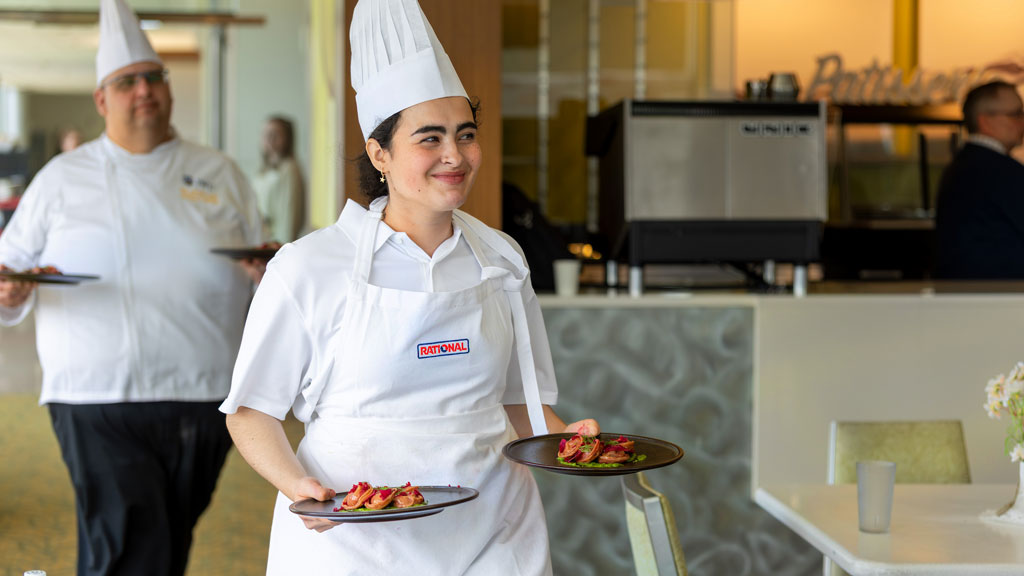
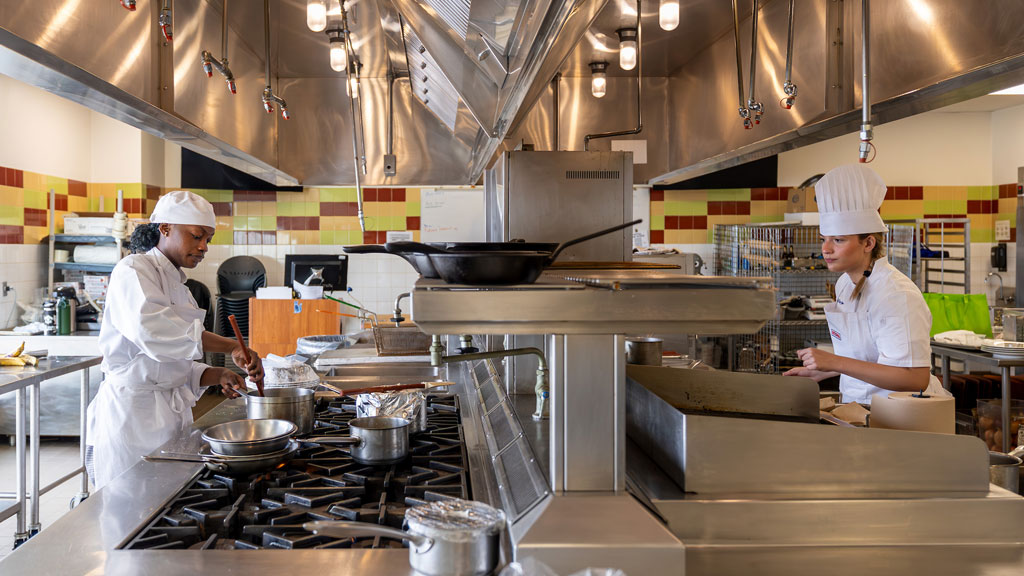
The participants and their families traveled from all over the United States for this year’s installment of the Future Food Scholarship, which took place in the second floor kitchens of the Harborside Campus’ Cuisinart Center for Culinary Excellence (CCCE) and was co-hosted by the College of Food Innovation & Technology (CFIT) and the Admissions team.
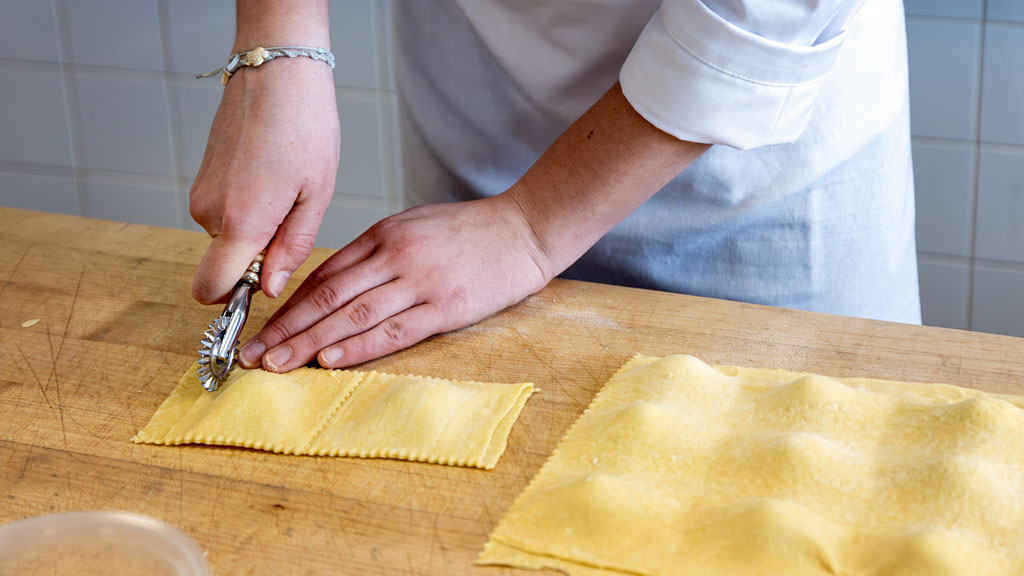
The four savory student chefs — Téa Kantor, Paola Ruiz, Aniyah Scarlett and Sarah Love — had a little over an hour and-a-half to make and plate their dishes for the judges, while the student chefs making sweet dishes — Katelyn Thilk, Evan LeSuer and Sam Teagarden — had roughly two-and-a-half hours for plate-up. Not a lot of time any way you slice it, given that everything on their plates, from pasta to sauces and toppings, needed to be made 100% from scratch.
Despite having a lot of prep to do, they all happily shared the inspirations behind their dishes. LeSuer and Kantor both chose beets as a favorite ingredient to work with: “It’s a staple in my household,” noted LeSuer, who incorporated beet mousse, candied beet chips and a cocoa-mushroom pâte à choux into her locavore dessert.
A longtime commercial baker, LeSuer noticed taste trends shifting towards savory flavors. “That’s why I chose beets,” she explained. “In the Hudson Valley, they’re well known for their beautiful color and they aren’t a lot of root vegetables in pastries.” LeSuer also chose to use mushrooms for their health benefits: “I specifically used Hen of the Woods because it’s supposed to support blood sugar regulation, cholesterol. And the fiber makes you feel fuller. Great for your gut health!”
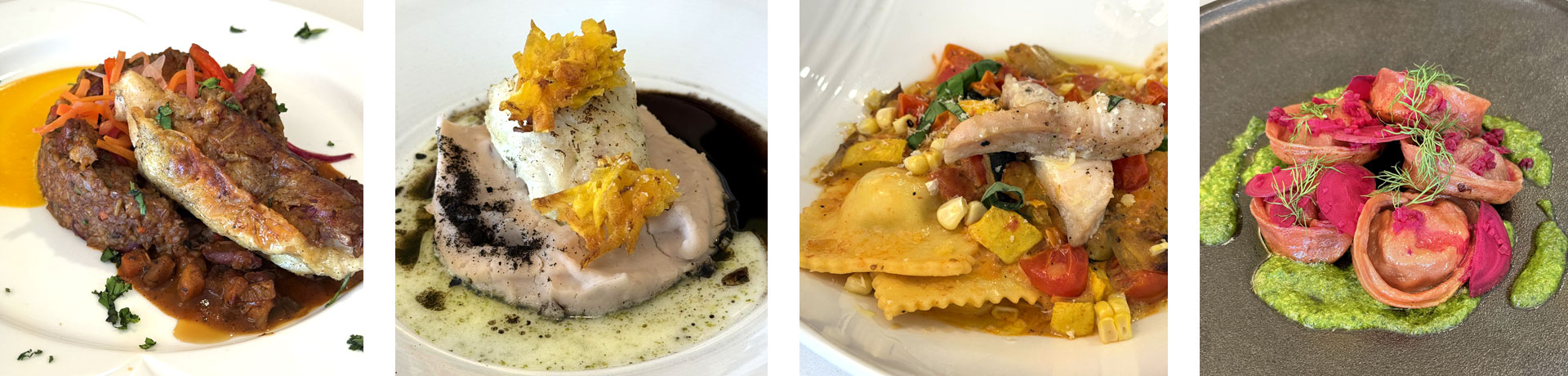
For her traditional varenyky dish (also known as pelmeni), Kantor was inspired by her grandparents, who lived behind the Iron Curtain before immigrating and taught her to make every ingredient count. To this end, she utilized the beets and the beet tops for a bright green pesto to top her colorful entree.
Love’s hearty ravioli dish drew its inspiration from her Chesapeake Bay home, utilizing an invasive fish (channa, also known as snakehead) caught by her father (a fisherman) and topped with a bounty of homegrown vegetables blended into a sauce. “These are all the flavors that I think of when I think of summer. You have red, green, yellow — all of the colors that just scream summer to me,” she explained.
Ruiz, a native of Puerto Rico, turned a terrifying real-life event — the devastating 2017 hurricane that caused widespread damage to Puerto Rico — into the inspiration for her dish, Eye of the Storm, which centered around a local fish (snapper) and utilized plantain chips and ash, as well as a starchy yautía puree, to bring bold flavor.
Sam Teagarden’s dish, Echoes of the Blackland Prairie, put a Texas twist on the olive oil cake. He kept it gluten free (as a tribute to his aunt) and the cake’s prairie seed crunch topping echoed peanut brittle in flavor but used sunflower seeds, pumpkin seeds and a touch of cayenne pepper to keep it allergen-free. (This, too, had a personal connection; Teagarden has a peanut allergy.)
With ingredients like Texas wildflower honey and sorghum flour (sorghum being an important cover crop), Teagarden hoped to highlight the vanishing prairie lands of Texas — the Blackland Prairie, for example, has shrunk from 60 million hectares to just 30,000. “I really love learning about sustainability and it’s made me realize that I probably want to [focus on] food and sustainability the rest of my career. I hope you find a deep connection to this, like I have,” he told the judges.
Scarlett’s dish, a brown-butter chicken stew, utilized plantains, whole grains and a zingy slaw to highlight the flavors of her Caribbean community: “I want to show how food can evolve with us; that we can have our flavors and healthy food,” she explained. When presenting her dish, she noted that diet-related diseases are on the rise, in tandem with many families struggling to access a consistently healthy meal. “So I decided to take a traditional dish and put a nourishing twist on it. This dish is my story, my roots and my vision all on one plate.”
Thilk’s dish, Mother Nature’s Garden, focused on food waste reduction and simple swaps for a lower glycemic index. Her honey meringue bomb was filled with an orange curd, topped with chocolate crumble and coconut oil shortbread, then brightened up with macerated berries and a pomegranate coulis. “I used honey as an alternative for sugar throughout,” she explained, “And instead of dairy products, I used coconut byproducts, like coconut oil and coconut cream.”
“I want to show how food can evolve with us; that we can have our flavors and healthy food.” Aniyah Scarlett
Unique Scholarship Opportunity
The Future Food Scholarship was established in 2023 with a sponsorship from RATIONAL, a company firmly invested in supporting new culinary talent. “They’ve been a great partner of ours for many, many years,” noted CFIT Dean Jason Evans.
RATIONAL’s technologically advanced ovens, multiuse appliances and digital kitchen management tools power JWU’s many teaching kitchens; during the event, these tools helped the student chefs move quickly and seamlessly from their prep tables to cooking and finishing their dishes.
How does the scholarship work? Open to incoming first-year and transfer students who have been accepted into one of JWU’s food-related programs, the Future Food Scholarship offers them a unique opportunity to flex their creative chops.
Entrants must submit their own recipes (savory or sweet categories). Their recipe’s concept and ingredients are required to address one or more of the following food system challenges:
Carbon footprint and ecological damage:
- Focusing on ingredients that travel relatively short distances to the point of consumption • Products whose production processes are not resource-intensive (like foraged ingredients)
Food waste:
- Recipes should minimize waste or utilize waste/byproducts created by other manufacturing processes (like spent brewer’s grains)
Poor nutritional outcomes, particularly in food-insecure households:
- Recipes should replace potentially harmful ingredients, like sugar, with cost-conscious and accessible ingredients and use superfoods and other nutrient-packed ingredients, where possible
In addition, each students was asked to write a brief personal essay — their story on a plate, essentially. While only the top tier winners in the sweet and savory categories are awarded a full scholarship for four years, the second-tier winners earn renewable scholarships. In addition, the two winning students’ high schools receive a RATIONAL iCombi Pro oven for use in their kitchens.
“You are exactly what we want at JWU. All of you check all of those boxes.” CFIT Dean Jason Evans
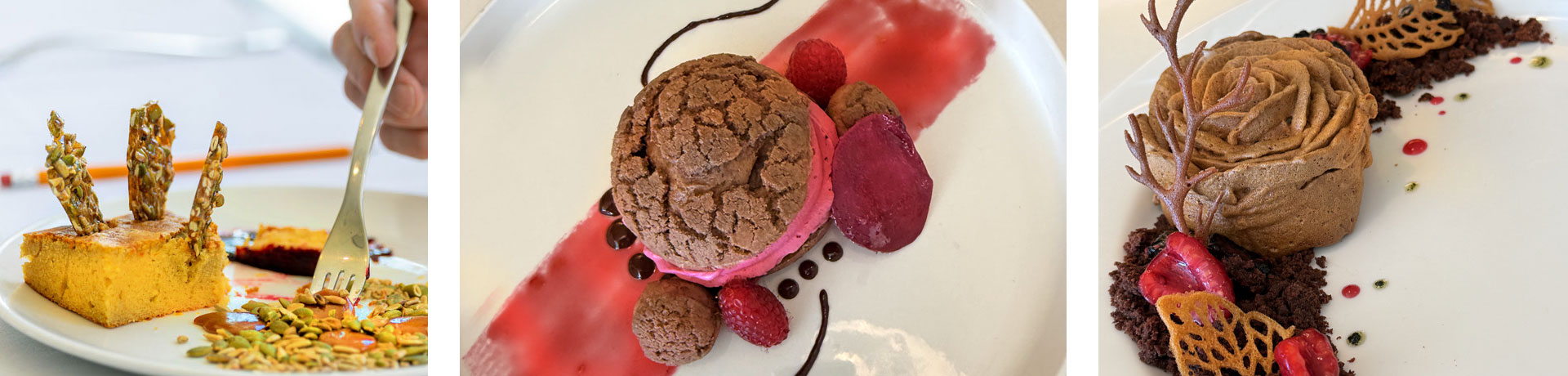
‘Stunning’ Dishes
The judges had a very tough job. Dean Evans joked that he got called back to where both sets of judges were deliberating “because they were darn near fighting.” He added, “It is not an exaggeration to say that we're really talking about fractions of points here in both savory and sweet categories. Every one of these dishes were stunning.”
The student chefs were judged on a number of factors, from their personal essays to the precision of their original recipes and the overall presentation of their dish before the judges. Other factors: How cleanly they worked in the JWU kitchens, the creativity of their plating and how well they tied their recipe concept to larger sustainability issues.
As an added bonus, a strong bond that developed between all the student chefs. Dean Evans remarked upon it before announcing the winners: “My favorite thing that I’ve seen over the last couple of days is how these competitors are interacting with each other,” he explained. “There’s such a level of respect and professionalism already, and you are exactly what we want at JWU. We want students that ultimately become this professional, who carry themselves the right way, and of course are talented. All of you check all of those boxes.”
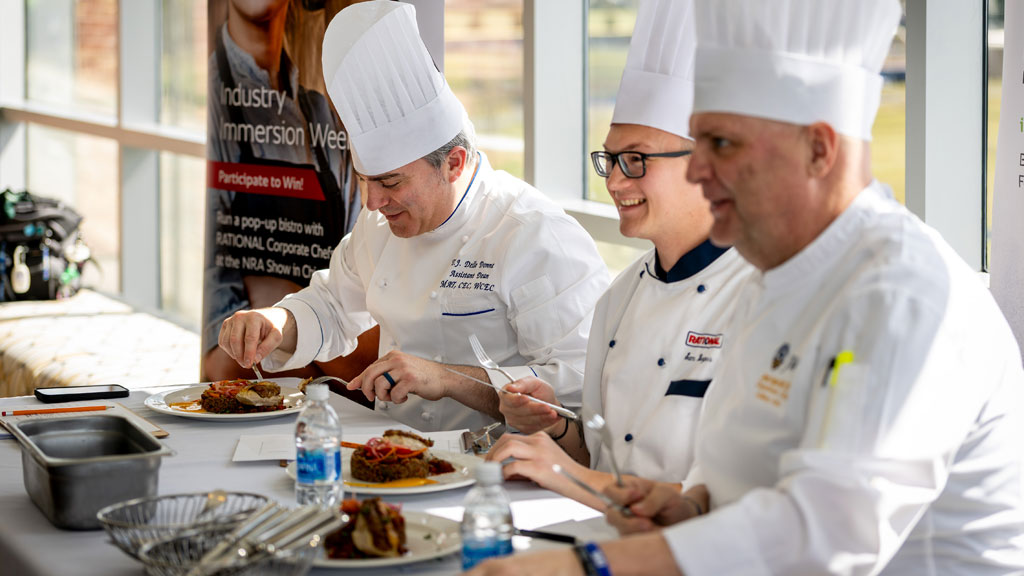
The Winners Reflect
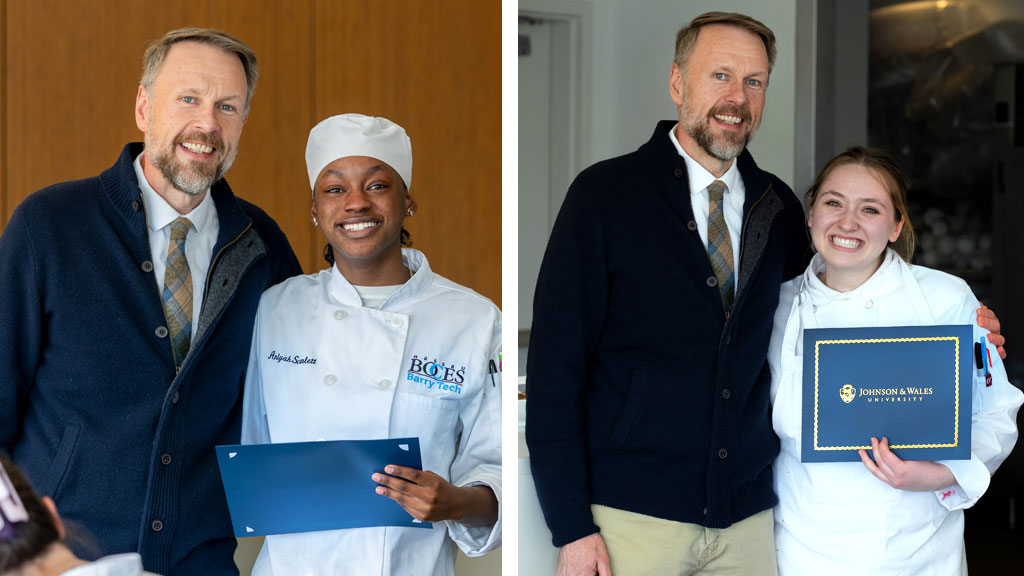
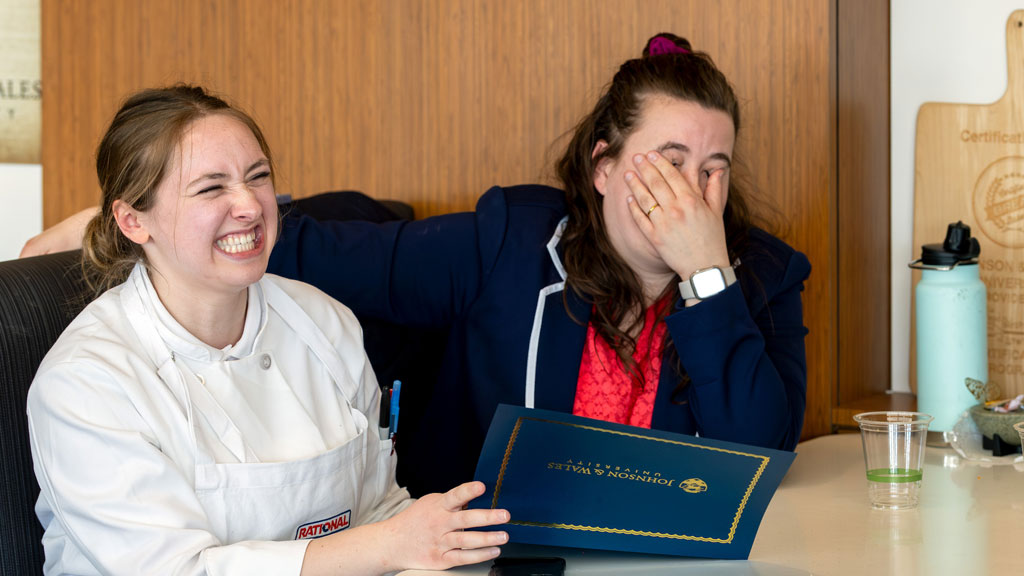
As Dean Evans announced the winners — Scarlett for the savory category and LeSuer for the sweet — a volley of cheers erupted in the sun-filled JWU dining room from the assembled crowd of parents, relatives, teachers, current students and event organizers, many of them from the Admissions team. A few happy tears were shed; hugs were exchanged.
Afterwards, the slightly stunned winners reflected on their whirlwind journey. Scarlett shared how much she has enjoyed her JWU experience so far, including attending Career Explorations (also known as CX) and Accepted Students Day. “Providence is an amazing little town,” she enthused. “And Johnson & Wales has been great. I fell in love with JWU on the summer CX program and I had a blast.”
LeSuer shared her future plans, while acknowledging that everything is open to change: “I’m looking to open my own cafe or my own bakery when I’m older — that’s the dream. But I’m not against maybe going into food science — I’ve always had an interest in that. My science teacher when I was younger asked me, ‘Why aren't you going into science? You’re so good at it.’ And I said, ‘I just have a love for making pastries.’ But that’s what I’m looking to JWU for. I feel like I can really explore my opportunities here.”
Related Posts

Culinary
Students
Johannah Evans Brings Passion to Scholarship Event
Hospitality & Business
Culinary
Experiential Education
Inside the Masters: Gaining Hands-On Experience at Augusta National
Health & Wellness
Culinary