Culinary
Alumni
Hospitality & Business
Health & Wellness
Culinary
JWU Nursing Students Support Dementia Caregivers Through Respite Grant Event
On May 30, 2026, JWU brought together nursing, nutrition and dietetics and culinary faculty and students for a Caregiver Kitchen Support and Respite Event at the Culinary Museum on the Harborside Campus. While nursing students and faculty provided respite care for individuals with dementia, their caregivers participated in hands-on programming including a 45-minute nutrition session focused on dementia-related dietary needs and a two-hour culinary skills workshop led by College of Food Innovation & Technology (CFIT) faculty.
The event was funded by a grant from the U.S. Department of Health and Human Services, in partnership with the Rhode Island Office of Healthy Aging. Marybeth Vieira, a faculty member in JWU’s Accelerated Bachelor of Science in Nursing program and one of the main organizers of the event, explained that dementia caregiver support is critical, as the disease is logistically and emotionally taxing.
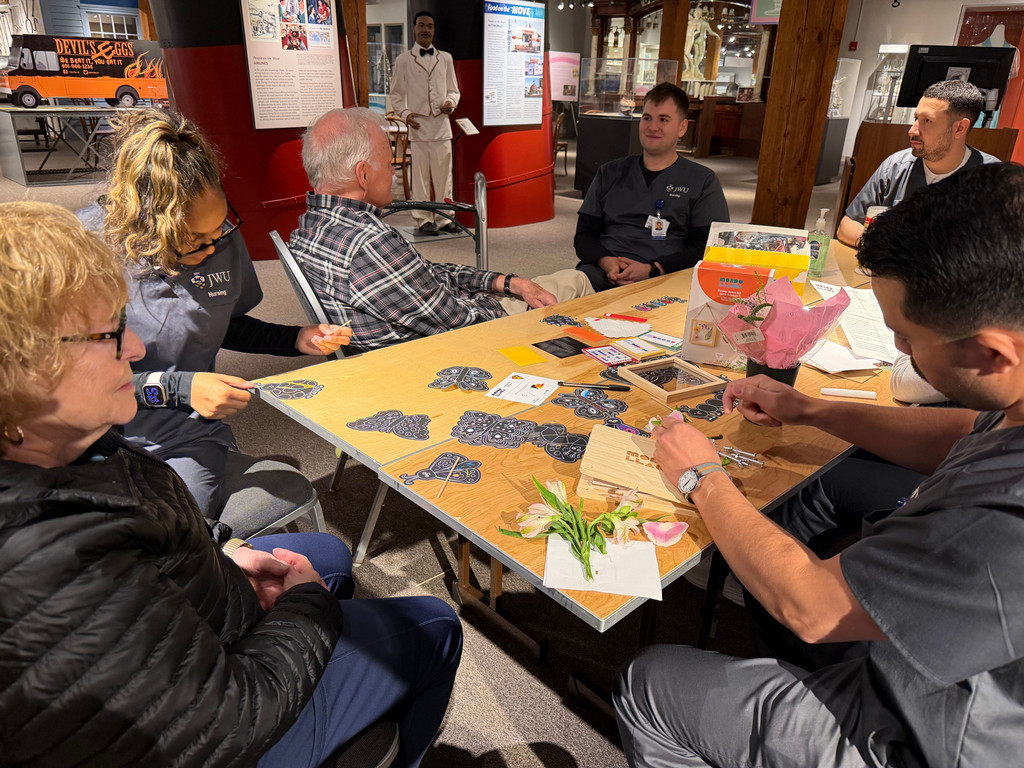
JWU students offered respite care for dementia patients while their caregivers took part in a hands-on nutrition demonstration.
“Many caregivers who support loved ones at home fall into a ‘gap’ where they do not qualify for homecare assistance, but cannot pay out of pocket. Therefore, they provide 100% of the care for their loved ones, often while managing a household, job, family, etc.,” she explained. “Dementia is also a progressive disease often described as ‘losing them while they're still here’ and can be particularly traumatic for loved ones. So, the 24/7 workload coupled with the grief of losing someone makes attention to caregivers through respite critical.”
Building Community Connections
JWU nursing students providing respite care had the opportunity to gain real-world experience with caring for vulnerable populations. Increasingly, patients are being released from hospitals or skilled nursing facilities with high levels of care needs, Vieira explained, making it essential that students understand how best to serve them. Additionally, working with real people in the community provides more context about social determinants of health, helping to shape a fuller picture of a patient’s needs beyond vital signs and symptoms.
Virakone Phiuphonphan from the Rhode Island Office of Healthy Aging said the event not only gave caregivers the physical skills needed to care for their loved ones, but also an opportunity to connect with and support each other.
“I have learned a lot about the challenges that caregivers have while cooking for or feeding their loved ones, especially for caregivers of family with dementia and dietary restrictions,” he added.
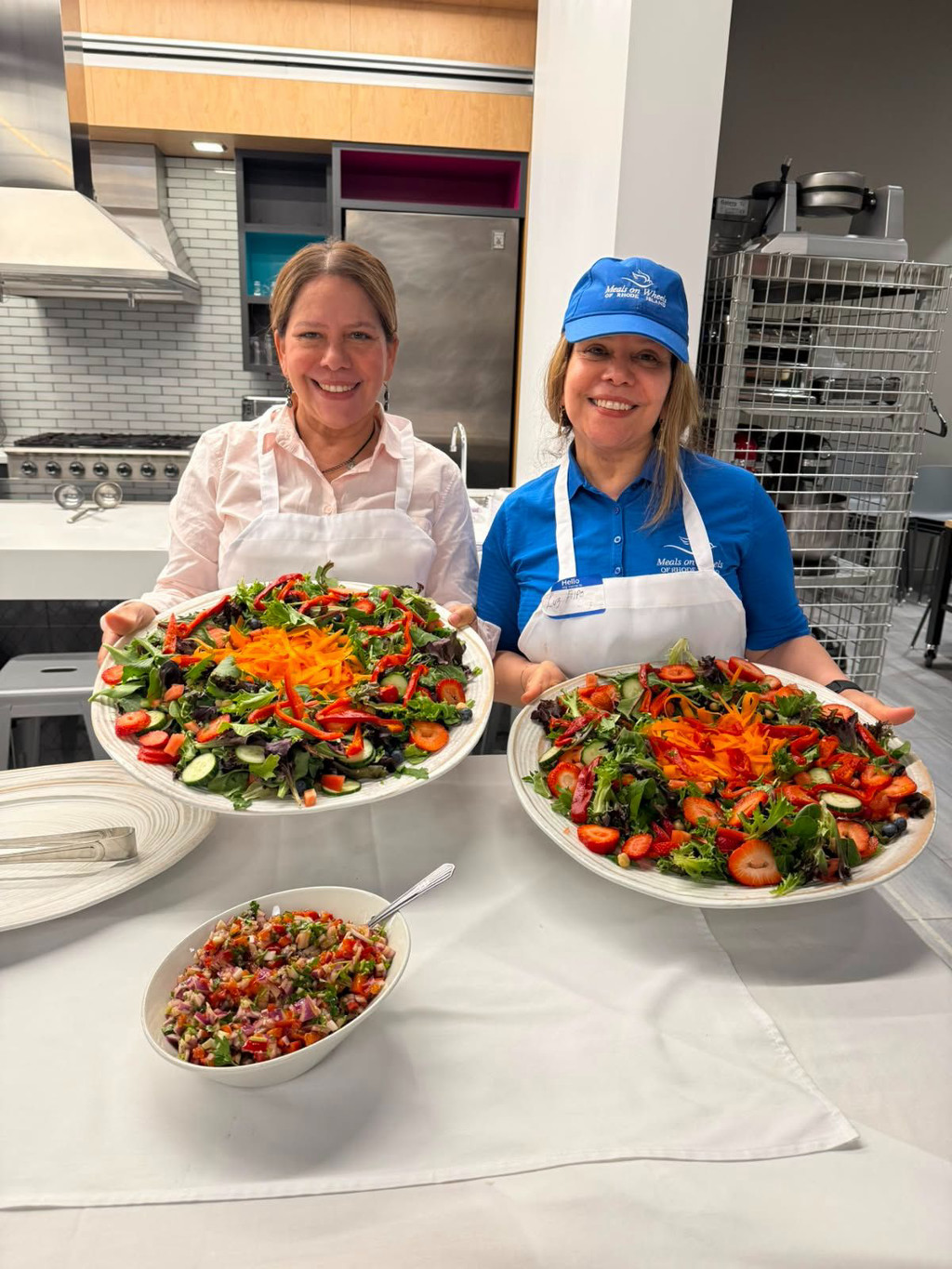
Two caregivers in the kitchen
Students who attended the event were “in awe” of the community response, Vieira said, adding that “neither they nor I expected the overwhelmingly positive response to their presence.”
One caregiver said the event was “truly amazing,” and that being together in the kitchen reminded her of cherished family memories.
“The presentation reminded me of my grandmother planning meals for our family, always considering how to prepare different options to meet everyone’s needs,” they said. “Menu planning, balanced meals and accommodating dietary restrictions are so important, especially for caregivers, families and community events. This workshop highlighted that beautifully.”
Another said that getting to interact with JWU students made the event fun for caregivers and patients. “It was wonderful to see these young people always willing to help us with anything we needed and with their beautiful smiles,” they said. “I’m confident they’ll be successful in their chosen fields and that our state will be fortunate to have them serving in our hospitals and restaurants.”
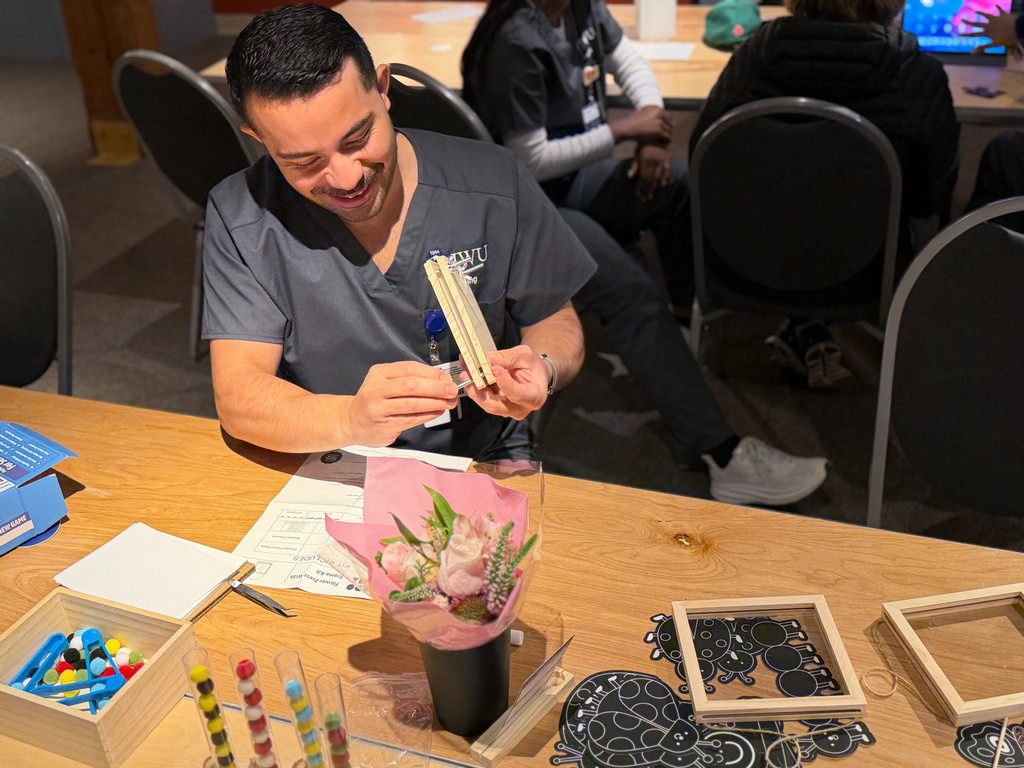
Caregivers praised JWU students for making the event fun for caregivers and patients.
Related Posts

Culinary
Students
Johannah Evans Brings Passion to Scholarship Event
Hospitality & Business
Culinary
Experiential Education
Inside the Masters: Gaining Hands-On Experience at Augusta National
Health & Wellness
Students